

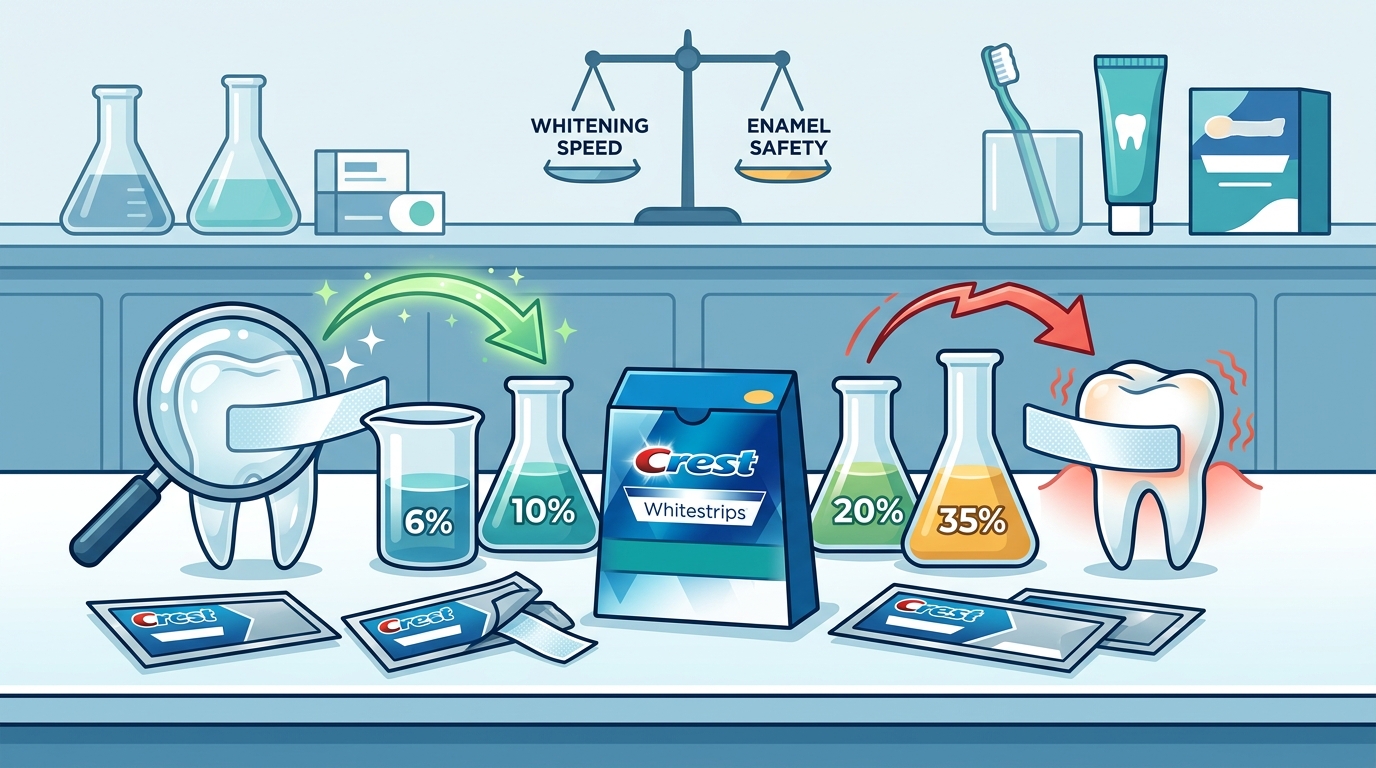
When selecting whitening strips, the peroxide concentration is the single most critical factor determining both the speed of results and the safety of the treatment. For most consumers, a hydrogen peroxide level between 6% and 10% offers the optimal balance of effective whitening and enamel safety. Higher concentrations can yield faster results but increase the risk of sensitivity. At Whitestrips-shop.nl, we provide original Crest products that clearly label these concentrations, helping you make an informed choice for your specific dental needs.
Understanding Peroxide Concentrations in Dental Care
Peroxide concentration is the measure of the active ingredient responsible for breaking down stain molecules on the tooth surface. In the context of over-the-counter whitening, this is typically expressed as a percentage of hydrogen peroxide or carbamide peroxide. It is important to distinguish between these two forms, as they behave differently in the mouth. Hydrogen peroxide is the active agent that directly oxidizes stains, while carbamide peroxide breaks down into hydrogen peroxide and urea upon contact with saliva. This distinction is vital because a 10% carbamide peroxide strip is roughly equivalent to a 3.5% hydrogen peroxide strip in terms of active whitening power. Understanding this conversion helps you compare products accurately without being misled by higher numbers on the packaging.
The Safety Threshold for Enamel Health
Dental professionals generally recommend that over-the-counter products remain below 6% hydrogen peroxide to minimize the risk of enamel erosion and gum irritation. The American Dental Association (ADA) has historically set guidelines suggesting that concentrations above this level should be used under professional supervision. When you look at a product label, you are essentially looking at the trade-off between speed and safety. A strip with 10% hydrogen peroxide will whiten teeth faster than one with 3%, but it also penetrates the enamel more aggressively. For individuals with thin enamel or existing sensitivity, sticking to the lower end of the spectrum is a prudent first step. This approach ensures that you achieve a brighter smile without compromising the structural integrity of your teeth.
Matching Concentration to Your Stain Type
The type of stain you are trying to remove should directly influence the peroxide level you choose. Extrinsic stains, such as those from coffee, tea, or red wine, sit on the surface of the tooth and are typically easier to remove. For these common lifestyle stains, a moderate concentration of 6% to 10% hydrogen peroxide is usually sufficient. Intrinsic stains, which occur within the tooth structure due to trauma or aging, are much harder to treat and may require higher concentrations or professional intervention. If you have never used whitening strips before, starting with a lower concentration allows you to gauge your sensitivity. This methodical approach prevents the shock of sudden pain, which is a common reason people abandon their whitening routine. By matching the strength to the severity of the stain, you ensure a more consistent and comfortable experience.
Duration and Frequency: The Complete Picture
Concentration does not act in a vacuum; it works in tandem with the duration of wear and the frequency of application. A higher concentration strip might be worn for 15 minutes, while a lower concentration strip might require 30 to 45 minutes to achieve the same result. This means that the total amount of peroxide your teeth are exposed to over a treatment cycle is what truly matters. For example, a 10% strip worn for 15 minutes delivers a different total dose than a 3% strip worn for 45 minutes. When evaluating products at Whitestrips-shop.nl, look for the recommended wear time alongside the percentage. This holistic view helps you understand the total exposure and allows you to plan your routine accordingly. It also helps in comparing different brands that may use different marketing terms for similar active ingredients.
Managing Sensitivity with Concentration Choice
Tooth sensitivity is the most common side effect of whitening, and it is directly correlated with peroxide levels. If you experience sharp pains when drinking cold water or eating ice cream, your enamel may be more porous or your dentin may be exposed. In such cases, a lower concentration is not just a preference but a necessity. You can also mitigate sensitivity by using a desensitizing toothpaste in conjunction with your strips. This combination approach allows you to use a slightly higher concentration if needed, while the toothpaste helps block the nerve endings. It is a practical strategy that many users find effective. By monitoring your response to the initial applications, you can adjust your routine to ensure comfort. This personalized approach is key to a successful long-term whitening regimen.
Key Takeaways
- 6% to 10% hydrogen peroxide is the standard range for effective over-the-counter whitening.
- Carbamide peroxide percentages are roughly three times higher than their hydrogen peroxide equivalents.
- Lower concentrations are safer for sensitive teeth and those with thin enamel.
- Always consider the wear time alongside the concentration to understand total exposure.
- Start with a lower concentration if you are new to whitening to assess your sensitivity.
- Extrinsic stains from coffee and tea respond well to moderate peroxide levels.
Frequently Asked Questions
Is 10% hydrogen peroxide too strong for daily use?
What is the difference between hydrogen and carbamide peroxide?
Hydrogen peroxide is the active whitening agent, while carbamide peroxide is a compound that breaks down into hydrogen peroxide and urea. Carbamide peroxide is often used in lower concentrations because it is less irritating to the gums. When comparing products, remember that 10% carbamide peroxide is roughly equivalent to 3.5% hydrogen peroxide.
Can I use whitening strips if I have braces?
It is generally not recommended to use whitening strips if you have braces, as the strips cannot reach the teeth covered by brackets. This can result in uneven whitening. You should consult your orthodontist for safe alternatives, such as custom trays or professional in-office treatments.
How long does it take to see results with 6% peroxide?
Results with 6% hydrogen peroxide typically become visible after 3 to 7 days of consistent use. The exact timeline depends on the severity of your stains and your natural tooth color. Patience is key, as gradual whitening is often safer and more sustainable than rapid, high-concentration treatments.
Do I need a prescription for higher peroxide levels?
In many regions, including the Netherlands, over-the-counter products are limited to specific peroxide concentrations. Higher concentrations, such as those found in professional dental treatments, require a prescription or a visit to a dentist. Always check local regulations and product labels to ensure compliance and safety.
Conclusion
Choosing the right peroxide level is a personal decision that balances your desired results with your dental health. By understanding the differences between hydrogen and carbamide peroxide, and by considering your sensitivity and stain type, you can select a product that works for you. At Whitestrips-shop.nl, we offer a range of original Crest Whitestrips with clearly labeled concentrations, ensuring you have the information you need to make a safe and effective choice. Visit our shop to find the perfect strength for your smile.