
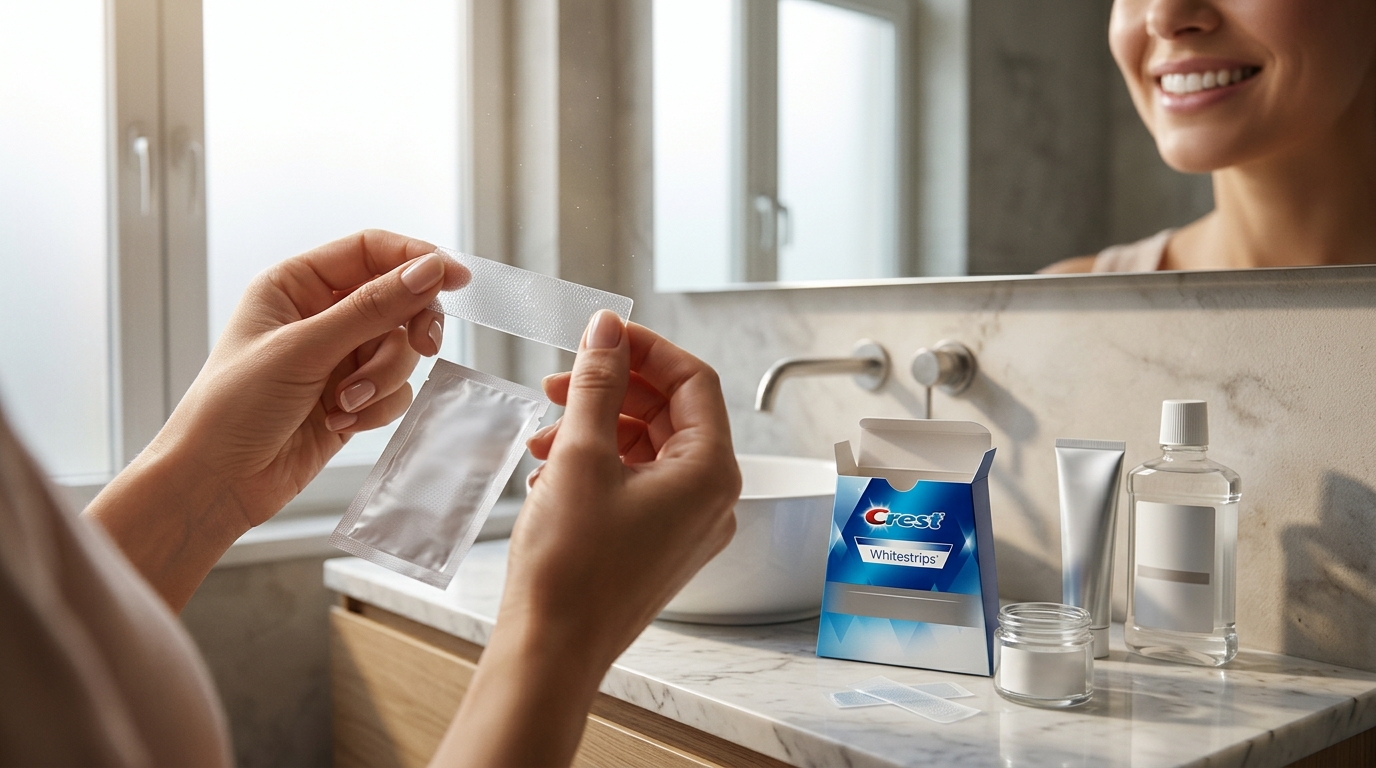
Most over-the-counter whitening strips contain between 6% and 10% hydrogen peroxide, while professional-grade strips can reach up to 15%. The concentration matters significantly because it determines the speed of whitening and the risk of tooth sensitivity. Higher concentrations penetrate enamel faster but increase the likelihood of temporary nerve irritation. At Whitestrips-shop.nl, we focus on original Crest products that balance effective whitening with safety for daily use.
What is Hydrogen Peroxide in Dental Care?
Hydrogen peroxide is a chemical compound that acts as an oxidizing agent. In dental whitening, it breaks down into water and oxygen. The oxygen molecules penetrate the enamel and dentin layers of the tooth. They oxidize the large, dark pigment molecules that cause stains. This process shrinks the stain molecules, making them reflect light differently. The result is a visibly whiter tooth surface. This chemical reaction is the core mechanism behind all peroxide-based whitening products.
Understanding Concentration Levels in Strips
Whitening strips vary widely in their active ingredient strength. Consumer-grade strips typically use 6% to 10% hydrogen peroxide. These are designed for gradual whitening over several days. Professional strips, often sold by dentists, may use 15% to 22% hydrogen peroxide. These deliver faster results but require careful application. The difference is not just in speed. It is in the depth of penetration. Lower concentrations work on surface stains. Higher concentrations can reach deeper into the dentin layer. This distinction is critical for managing expectations and minimizing side effects.
Does Concentration Actually Matter for Results?
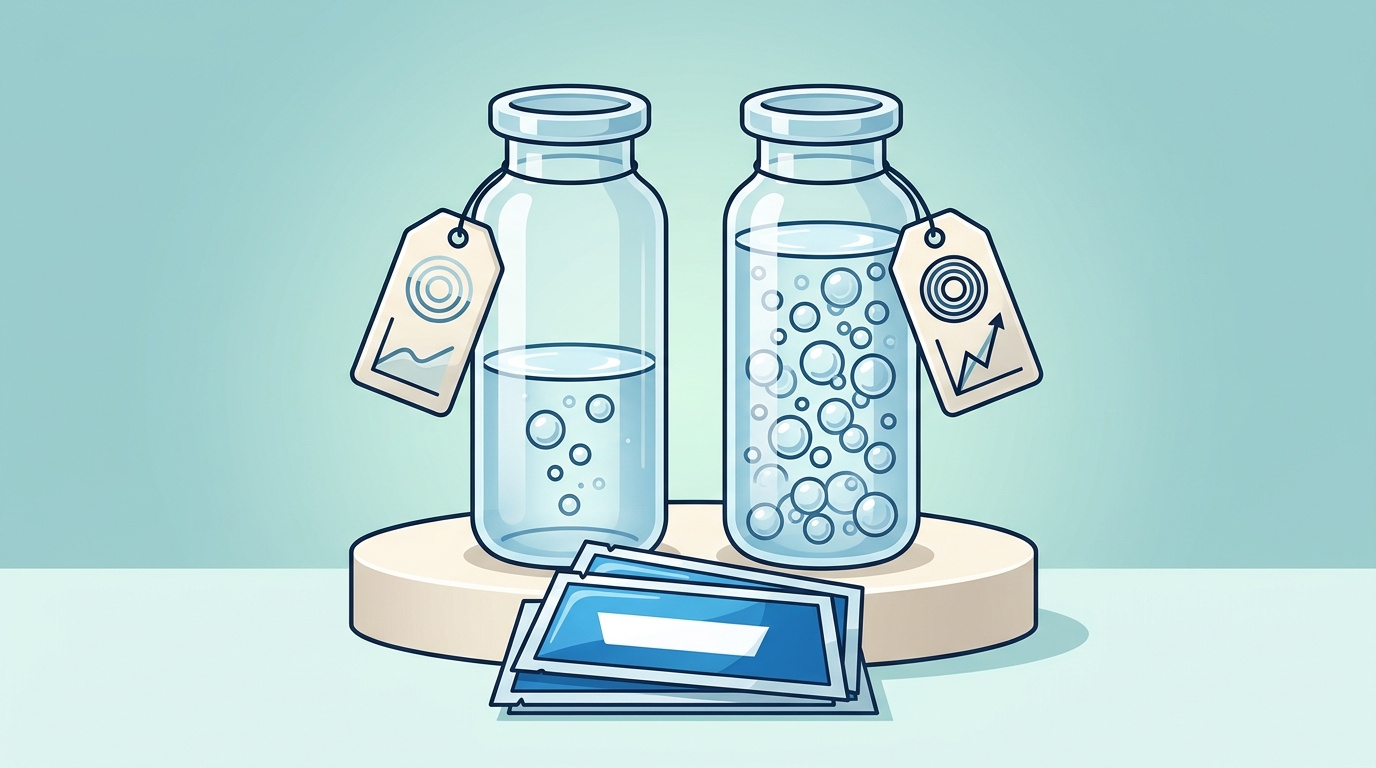
Yes, concentration directly impacts the final shade change. A 6% strip may lighten teeth by one to two shades over a week. A 15% strip might achieve the same result in two to three days. However, the law of diminishing returns applies. Going from 10% to 15% does not double the whitening power. It increases the risk of sensitivity. Many users report temporary toothache or gum irritation with higher concentrations. This is why Whitestrips-shop.nl recommends starting with lower concentrations. You can always increase strength later if needed. Starting high often leads to discontinuation due to discomfort.
Safety, Sensitivity, and Enamel Health
Hydrogen peroxide is safe for enamel when used as directed. It does not erode tooth structure like acid-based products. However, it can cause transient sensitivity. This occurs when the peroxide penetrates the enamel and reaches the nerve. The sensation is usually temporary and resolves within 24 to 48 hours. To mitigate this, use desensitizing toothpaste alongside your strips. Avoid very hot or cold foods immediately after application. If sensitivity persists, stop use and consult a dentist. The goal is effective whitening without compromising oral health. Balance is key to long-term success.
Choosing the Right Strip for Your Needs
Key Takeaways
- Consumer strips typically contain 6% to 10% hydrogen peroxide.
- Professional strips can contain up to 15% to 22% hydrogen peroxide.
- Higher concentrations whiten faster but increase sensitivity risk.
- Hydrogen peroxide does not damage enamel but can irritate nerves.
- Start with lower concentrations if you have sensitive teeth.
- Always check the packaging for the exact peroxide percentage.
- Use desensitizing toothpaste to manage temporary discomfort.
Frequently Asked Questions
What is the maximum safe concentration of hydrogen peroxide in strips?
For over-the-counter use, 10% to 15% is generally considered safe for most adults. Concentrations above 15% are typically reserved for professional dental use under supervision. Always follow the manufacturer's instructions for application time and frequency.
Does higher concentration mean better results?
Not necessarily. Higher concentrations whiten faster, but they do not always produce a whiter final shade. They increase the risk of sensitivity, which may force you to stop treatment early. A lower concentration used consistently often yields better long-term results.
Can hydrogen peroxide damage my enamel?
No, hydrogen peroxide does not erode enamel. It is an oxidizing agent, not an acid. However, it can cause temporary sensitivity by penetrating the enamel and reaching the nerve. This effect is reversible and resolves after stopping use.
How long should I leave whitening strips on?
Where can I buy authentic Crest whitening strips in the Netherlands?
You can purchase original Crest whitening strips at Whitestrips-shop.nl. We specialize in authentic US products and provide detailed information on concentration levels to help you choose the right product.
Conclusion
Understanding hydrogen peroxide concentration is essential for safe and effective teeth whitening. The percentage determines both the speed of results and the potential for sensitivity. By choosing the right concentration for your dental needs, you can achieve a brighter smile without discomfort. For reliable products and expert guidance, visit Whitestrips-shop.nl today.