

Yes, severe or chronic tooth sensitivity can make whitening strips unsafe or ineffective for some users. However, mild sensitivity is often manageable with the right product selection and usage habits. Whitestrips-shop.nl provides guidance on selecting original Crest Whitestrips that balance whitening efficacy with comfort for sensitive enamel.
Understanding Tooth Sensitivity and Whitening
Tooth sensitivity is a sharp, transient pain in response to thermal, tactile, osmotic, or chemical stimuli. Whitening strips work by delivering peroxide-based agents that penetrate enamel to break down stains. This chemical process can temporarily increase the permeability of enamel, allowing stimuli to reach the nerve more easily. For individuals with pre-existing sensitivity, this mechanism can exacerbate discomfort during and shortly after application. For additional details, review the Customer Experience.
It is important to distinguish between temporary post-treatment sensitivity and chronic dental issues. Temporary sensitivity is a common side effect that usually resolves within 24 to 48 hours. Chronic sensitivity may indicate underlying enamel erosion, gum recession, or micro-cracks. If you experience persistent pain unrelated to whitening, consult a dentist before starting any bleaching regimen.
Clinical Evidence on Whitening Strips
Research confirms that whitening strips are an effective alternative to professional in-office bleaching for many patients. A systematic review and meta-analysis published in PubMed found that whitening strips lead to equivalent color change compared with supervised dental bleaching in patients with permanent dentition. This equivalence suggests that over-the-counter strips are a scientifically valid option for achieving a brighter smile without the higher cost of clinical procedures.
However, efficacy does not equate to universal comfort. A double-blinded, randomized, controlled clinical study examined the effect of three different whitening strips on dental sensitivity, oral tissues, tooth color, and luster. The study highlighted that hydrogen peroxide-based strips produce a significant whitening effect, but the degree of sensitivity varies by formulation and individual biology. Older patients may experience a slower response, and those with higher baseline sensitivity may require gentler concentrations.
Safety Protocols for Sensitive Users
For users with sensitive teeth, safety hinges on concentration and duration. Lower concentration peroxide strips are generally better tolerated than high-strength variants. If you are new to whitening or have a history of sensitivity, start with a product labeled for sensitive teeth or one with a lower peroxide percentage. This approach minimizes the risk of overwhelming the nerve while still providing gradual whitening results. according to Effectiveness of Whitening
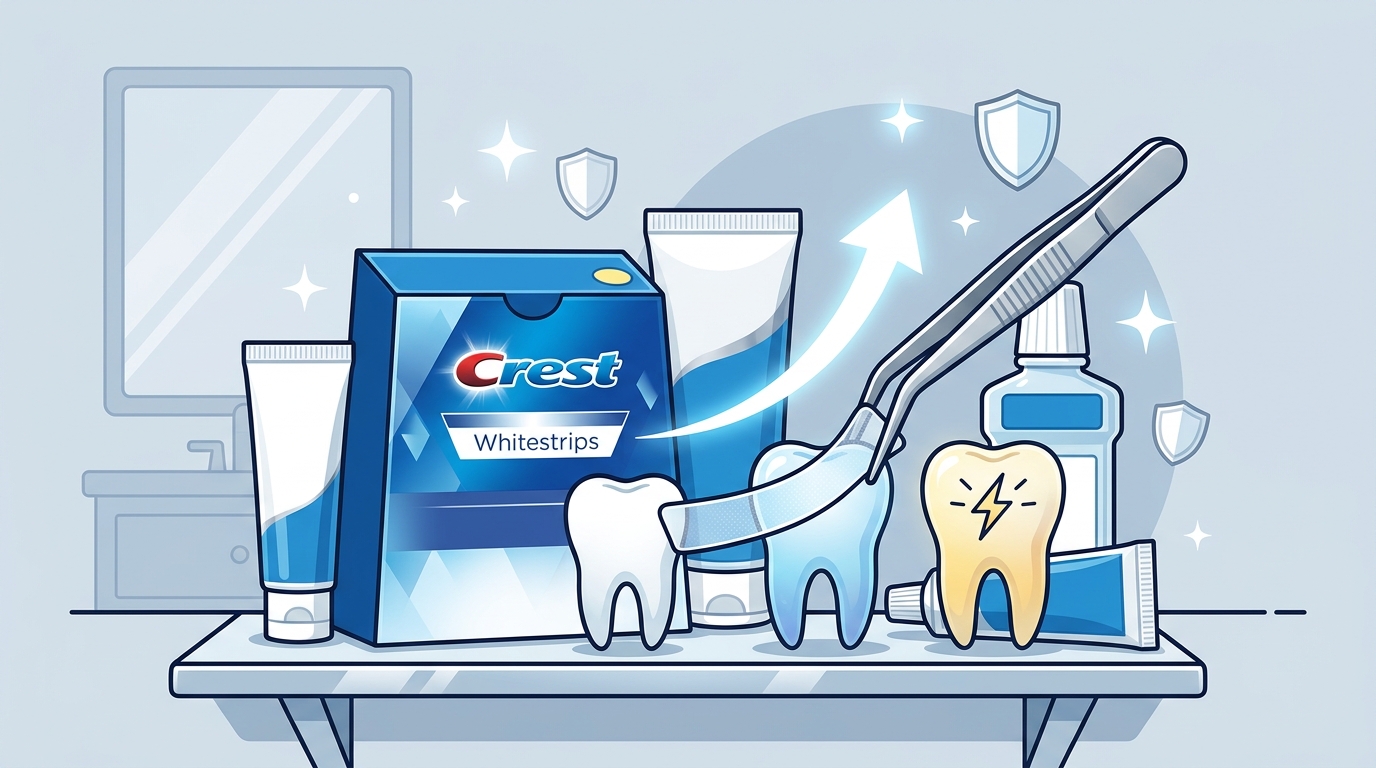
Adhering to the recommended application time is critical. Leaving strips on longer than instructed increases the risk of sensitivity and does not necessarily improve whitening results. Additionally, using a desensitizing toothpaste containing potassium nitrate or fluoride can help mitigate discomfort. These ingredients block the transmission of pain signals to the nerve, providing a protective layer during the whitening process.
Selecting the Right Product
Not all whitening strips are created equal. When shopping for a product, look for formulations that include soothing agents or are specifically marketed for sensitive teeth. Whitestrips-shop.nl offers a range of original Crest Whitestrips, including variants designed for different needs. While the shop carries bestsellers like the Age Renewal line, which offers long-lasting results, users with high sensitivity should carefully review the product description for concentration levels and recommended usage frequency.
It is also worth considering complementary products. Using a non-whitening fluoride toothpaste during the whitening course can help maintain enamel health. Avoiding abrasive whitening toothpastes during this period is also advisable, as they can wear down enamel and increase sensitivity. The goal is to whiten without compromising the structural integrity of your teeth.
When to Stop and Consult a Professional
While mild sensitivity is expected, certain signs indicate that you should stop using whitening strips immediately. If you experience sharp, lingering pain that lasts more than 48 hours after removing the strips, discontinue use. This could be a sign of enamel damage or an underlying dental condition that requires professional attention.
Key Takeaways
- Severe or chronic tooth sensitivity can make whitening strips unsafe or uncomfortable.
- Whitening strips are clinically proven to be as effective as professional bleaching for many users.
- Lower concentration peroxide strips are generally better for sensitive teeth.
- Using a desensitizing toothpaste can help mitigate discomfort during treatment.
- Always follow the recommended application time to avoid excessive sensitivity.
- Stop using strips if pain lasts more than 48 hours and consult a dentist.
- Choose original products from reputable retailers to ensure quality and safety.
Frequently Asked Questions
Are whitening strips safe for people with sensitive teeth?
Yes, they can be safe if you choose a lower concentration product and follow usage guidelines. Mild sensitivity is common but should resolve quickly. If pain is severe or persistent, stop use and consult a dentist.
How long does sensitivity last after using whitening strips?
Typically, sensitivity lasts 24 to 48 hours after the final application. If it persists longer, it may indicate an underlying issue that requires professional evaluation.
Can I use desensitizing toothpaste with whitening strips?
Yes, using a desensitizing toothpaste is recommended. It helps block pain signals and protects enamel, making the whitening process more comfortable.
Do whitening strips damage enamel?
When used as directed, whitening strips do not permanently damage enamel. However, overuse or using high-concentration products too frequently can lead to temporary permeability changes and sensitivity.
What should I do if my gums are sensitive?
If your gums are sensitive or receding, be cautious with whitening strips. Exposed roots are more sensitive to peroxide. Consult a dentist for personalized advice on safe whitening options.
Where can I buy original Crest Whitestrips in the Netherlands?
Conclusion
Sensitive teeth do not automatically disqualify you from using whitening strips, but they do require a careful approach. By selecting the right product, following safety protocols, and monitoring your response, you can achieve a brighter smile without compromising your oral health. Whitestrips-shop.nl is your trusted source for original Crest Whitestrips and expert guidance on safe whitening practices. Explore our range of products to find the best fit for your specific needs and enjoy a confident, healthy smile.