

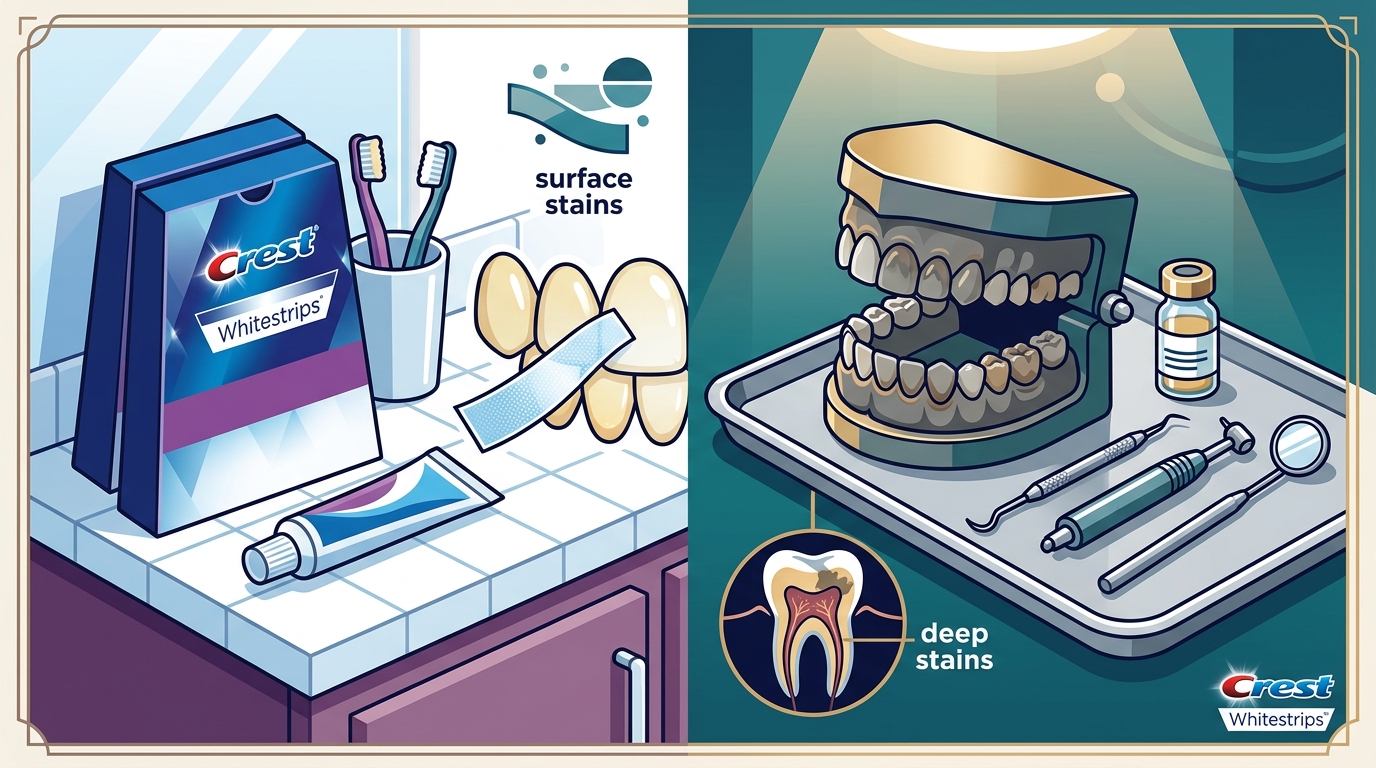
Whitening strips cannot fix deeply discolored teeth caused by structural damage or intrinsic staining. They only lighten surface enamel. If your teeth are dark due to trauma, decay, or aging, you need professional dental restoration. Whitestrips-shop.nl provides original Crest products for mild staining, but severe cases require a dentist. For additional details, review the Crest Whitestrips Bestel vanaf.
The Limits of At-Home Whitening
At-home whitening is a cosmetic surface treatment. It works by penetrating the outer layer of enamel to break down chromogens. However, it has hard physical limits. It cannot change the color of dentin, the yellowish layer beneath the enamel. It also cannot repair structural defects. For additional details, review the .
For customers in the Netherlands, it is crucial to distinguish between these two categories. If your teeth are generally healthy but slightly yellow, strips may help. If they are gray, brown, or have visible cracks, strips will fail. You need a clinical assessment first. For additional details, review the Customer Experience.
Identifying Intrinsic Stains
Intrinsic staining is a permanent change in the tooth's internal color. It is distinct from extrinsic staining, which sits on the surface. Extrinsic stains come from coffee, tea, or tobacco. Intrinsic stains come from within the tooth. They are much harder to treat. For additional details, review the Frequently Asked Questions.
One specific example is a tooth that turned gray after a childhood injury. The nerve inside the tooth died, and the blood broke down, staining the dentin. This is a classic case where strips are useless. The color is deep inside. Another example is tetracycline staining. This occurs if a child takes tetracycline antibiotics during tooth development. The drug binds to the calcium in the forming tooth. The result is a gray or brown band that runs through the enamel and dentin. For additional details, review the About.
These conditions require professional intervention. A dentist might recommend internal bleaching or a crown. Trying to use strips on these teeth is a waste of money. It may also cause unnecessary sensitivity. Always check the origin of the stain before buying a product.
Professional Restoration Options
For intrinsic stains, a dentist might suggest a porcelain veneer. A veneer is a thin shell of ceramic that covers the front of the tooth. It masks the dark color completely. For severe structural damage, a crown is the standard solution. A crown is a cap that covers the entire tooth. It provides strength and a natural look. These are permanent restorations. They do not fade like whitening results do.
Internal bleaching is another option for dead teeth. The dentist removes the nerve and places bleaching gel inside the tooth. This lightens the dentin from the inside. It is a specialized procedure. It is not something you can do at home. Understanding these options helps you set realistic expectations. You are not just buying a cosmetic fix; you are investing in dental health.
Safety and Sensitivity Risks
Using whitening strips on damaged teeth carries risks. The peroxide in strips can irritate exposed dentin. If you have cracks or cavities, the gel can seep into the pulp. This causes sharp pain and sensitivity. It can also lead to pulp necrosis, or nerve death. This is a serious dental emergency.
Always inspect your teeth before starting a whitening regimen. Look for chips, cracks, or dark spots. If you see any of these, stop. Do not apply strips. Consult a dentist immediately. Sensitivity is a warning sign. It means the enamel is compromised or the nerve is irritated. Ignoring it can lead to long-term damage. Your dental health is more important than a quick cosmetic fix.
Making the Right Decision
Choosing between strips and professional treatment depends on the stain type. For mild extrinsic staining, strips are effective and affordable. They are a good first step. For deep intrinsic staining, professional treatment is necessary. Strips will not work. You need a dentist.
Start with a dental checkup. Ask your dentist to assess the cause of your discoloration. If they say it is surface staining, you can try strips. If they say it is intrinsic, ask about veneers or crowns. This is the only way to get the result you want. Do not guess. Do not rely on marketing claims. Rely on clinical diagnosis. Your teeth are unique. Your treatment plan should be too.
Whitening strips are a tool, not a cure. They have a specific place in dental care. They are for maintenance and mild correction. They are not for restoration. Knowing this distinction saves you time and money. It also prevents potential harm. Make an informed choice based on your specific dental condition.
Key Takeaways
- Whitening strips only lighten surface enamel and cannot fix intrinsic stains.
- Deep discoloration from trauma or antibiotics requires professional restoration.
- Intrinsic stains are embedded in the dentin and are permanent without clinical intervention.
- Using strips on cracked or damaged teeth can cause severe pain and nerve damage.
- Porcelain veneers and crowns are the standard solutions for deep discoloration.
- Always consult a dentist before starting any whitening regimen to assess stain type.
- Whitestrips-shop.nl sells original Crest products for healthy, mildly stained teeth.
Frequently Asked Questions
Can whitening strips remove gray stains from a dead tooth?
No. Gray stains in dead teeth are intrinsic. They are inside the dentin. Strips cannot reach them. You need internal bleaching or a crown from a dentist.
Do Crest Whitestrips work on tetracycline stains?
No. Tetracycline stains are deep and structural. At-home strips are ineffective. Professional veneers or crowns are the recommended treatment.
Is it safe to use strips if I have sensitive teeth?
It depends. If sensitivity is due to enamel erosion, strips may worsen it. Consult a dentist first. If approved, use desensitizing toothpaste alongside strips.
How long do whitening strip results last?
Results typically last 6 to 12 months. This depends on your diet and oral hygiene. Professional restorations like veneers last much longer, often 10 to 15 years.
Where can I buy original Crest Whitestrips in the Netherlands?
Can strips fix a chipped tooth?
No. Strips cannot repair physical damage. A chipped tooth needs bonding or a crown. Whitening only changes color, not shape or structure.