

What Types of Tooth Stains Can Whitening Strips Actually Remove?
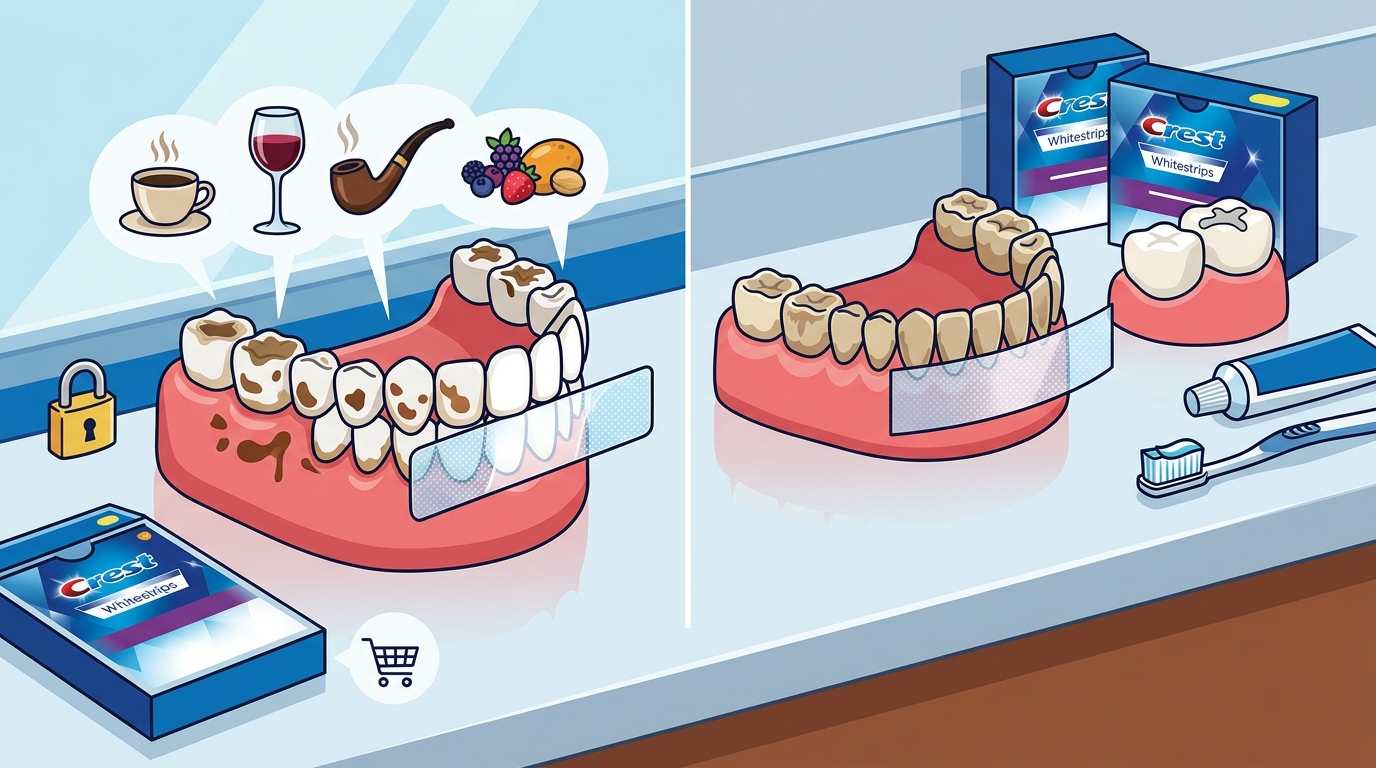
Whitening strips effectively remove extrinsic surface stains caused by food, drink, and tobacco, but they cannot alter the color of intrinsic stains or dental restorations. At Whitestrips-shop.nl, we provide original Crest Whitestrips designed to target these specific surface discolorations. Understanding the difference between stain types is crucial for setting realistic expectations for your smile.
The Science of Extrinsic Stains
Extrinsic staining is a surface-level discoloration that occurs on the outer layer of the tooth, known as the enamel. This type of stain is the primary target for over-the-counter whitening products. The active ingredient in most strips, such as hydrogen peroxide, penetrates the enamel to break down chromogens, which are the molecules responsible for color. For additional details, review the .
Understanding Intrinsic Stains and Limitations
Intrinsic staining is a deeper discoloration that occurs within the dentin, the layer of tooth structure beneath the enamel. Unlike extrinsic stains, intrinsic stains are not caused by external substances adhering to the tooth. Instead, they result from internal factors such as aging, trauma, or excessive fluoride exposure during tooth development. For additional details, review the Customer Experience.
Whitening strips have limited efficacy on intrinsic stains because the peroxide cannot penetrate deeply enough to alter the color of the dentin significantly. For instance, a tooth that was discolored due to childhood trauma may remain gray or brown even after a full course of whitening strips. In such cases, professional dental treatments like veneers or bonding are often required to achieve the desired aesthetic result. It is important to consult a dentist if you suspect your discoloration is intrinsic. For additional details, review the Frequently Asked Questions.
The Impact of Dental Restorations
Dental restorations, such as fillings, crowns, and bonding, do not respond to whitening strips. These materials are made from composites, porcelain, or metal, which are chemically inert to peroxide-based whitening agents. Consequently, if you have a white or composite filling on a front tooth, it will not change color while the natural tooth structure around it becomes lighter.
This discrepancy can lead to a mismatched appearance, where the natural teeth are whiter than the restorations. For example, a patient with a single porcelain crown on an upper incisor may find that the crown remains the same shade after whitening the adjacent natural teeth. To address this, dentists often recommend replacing restorations after whitening is complete to ensure a uniform smile. At Whitestrips-shop.nl, we advise customers to consider their existing dental work before starting a whitening regimen.
Managing Sensitivity and Enamel Health
While whitening strips are effective for surface stains, they can sometimes cause temporary tooth sensitivity. This occurs because the peroxide can temporarily dehydrate the enamel or increase its permeability. To minimize this risk, it is essential to follow the manufacturer's instructions carefully and avoid overuse. Using strips more frequently than recommended can lead to enamel erosion and increased sensitivity.
Individuals with pre-existing enamel issues, such as cracks or wear, should exercise caution. For example, a person with sensitive teeth may experience discomfort when consuming cold beverages during treatment. If sensitivity persists, it is advisable to pause treatment and consult a dental professional. Using a desensitizing toothpaste alongside whitening strips can help manage these symptoms effectively.
Key Takeaways
- Whitening strips are most effective on extrinsic surface stains caused by diet and lifestyle.
- Intrinsic stains within the dentin are difficult to remove with at-home whitening products.
- Dental restorations like fillings and crowns do not change color with whitening strips.
- A mismatch between natural teeth and restorations may occur after whitening.
- Temporary sensitivity is a common side effect that usually resolves after treatment ends.
- Consulting a dentist is recommended for intrinsic stains or significant dental restorations.
Frequently Asked Questions
Can whitening strips remove stains from coffee and tea?
Yes, whitening strips are highly effective at removing extrinsic stains caused by coffee, tea, and other dietary factors. These surface-level discolorations are the primary target for peroxide-based whitening products.
Do whitening strips work on fillings or crowns?
No, whitening strips do not affect dental restorations such as fillings, crowns, or bonding. These materials are not porous and do not absorb the whitening agent, so they will remain their original color.
Why didn't my teeth get whiter after using strips?
If your discoloration is intrinsic, meaning it is within the tooth structure rather than on the surface, whitening strips may have limited effect. Intrinsic stains often require professional dental treatment for significant improvement.
Are whitening strips safe for sensitive teeth?
Whitening strips can cause temporary sensitivity in some users. If you have sensitive teeth, start with a lower concentration product and use a desensitizing toothpaste. Consult your dentist if discomfort persists.
How long does it take to see results from whitening strips?
Most users notice visible results within a few days of consistent use. The full treatment course typically takes one to two weeks, depending on the specific product and the severity of the stains.