

Dental sensitivity affects approximately 40% of the adult population, making the choice of whitening agent a critical decision for oral health. According to the Mayo Clinic, sensitivity often arises when enamel thins or gums recede, exposing the dentin layer to external stimuli. Selecting the wrong whitening product can exacerbate this condition, leading to painful nerve responses. This guide analyzes the specific criteria for choosing safe, effective whitening strips for sensitive teeth, focusing on formulation chemistry, concentration levels, and brand reliability available through whitestrips-shop.nl.
Understanding Tooth Sensitivity During Whitening
Whitening strips work by delivering hydrogen peroxide or carbamide peroxide to the tooth surface. This agent penetrates the enamel to break down stain molecules. For individuals with sensitive teeth, this process can trigger transient dentin hypersensitivity. WebMD reports that this sensitivity is typically temporary but can be severe if the peroxide concentration is too high for the user's enamel integrity.
Hydrogen peroxide is a chemical compound that acts as a bleaching agent by releasing oxygen radicals. These radicals penetrate the enamel and break down complex stain molecules into smaller, less pigmented particles. When the enamel is compromised or the dentin is exposed, these radicals can irritate the nerve endings within the tooth. Therefore, the primary goal for sensitive users is to balance bleaching efficacy with nerve protection.
Key Selection Criteria for Sensitive Teeth
When evaluating whitening strips for sensitive teeth, you must look beyond marketing claims and examine the technical specifications of the product. The following criteria are non-negotiable for maintaining comfort during treatment.
1. Peroxide Concentration Levels
The concentration of the active ingredient is the most significant factor in determining sensitivity risk. Over-the-counter strips typically range from 6% to 10% hydrogen peroxide. For sensitive teeth, products at the lower end of this spectrum are preferable. Healthline notes that lower concentrations require longer application times to achieve results but significantly reduce the risk of nerve irritation.
2. Formulation Additives
Advanced formulations often include desensitizing agents such as potassium nitrate or fluoride. Potassium nitrate is a compound that calms the nerves inside the teeth. These additives work by blocking the transmission of pain signals from the dentin to the nerve. Products that combine whitening agents with these soothing components offer a dual-action approach that is ideal for sensitive users.
3. Strip Fit and Material
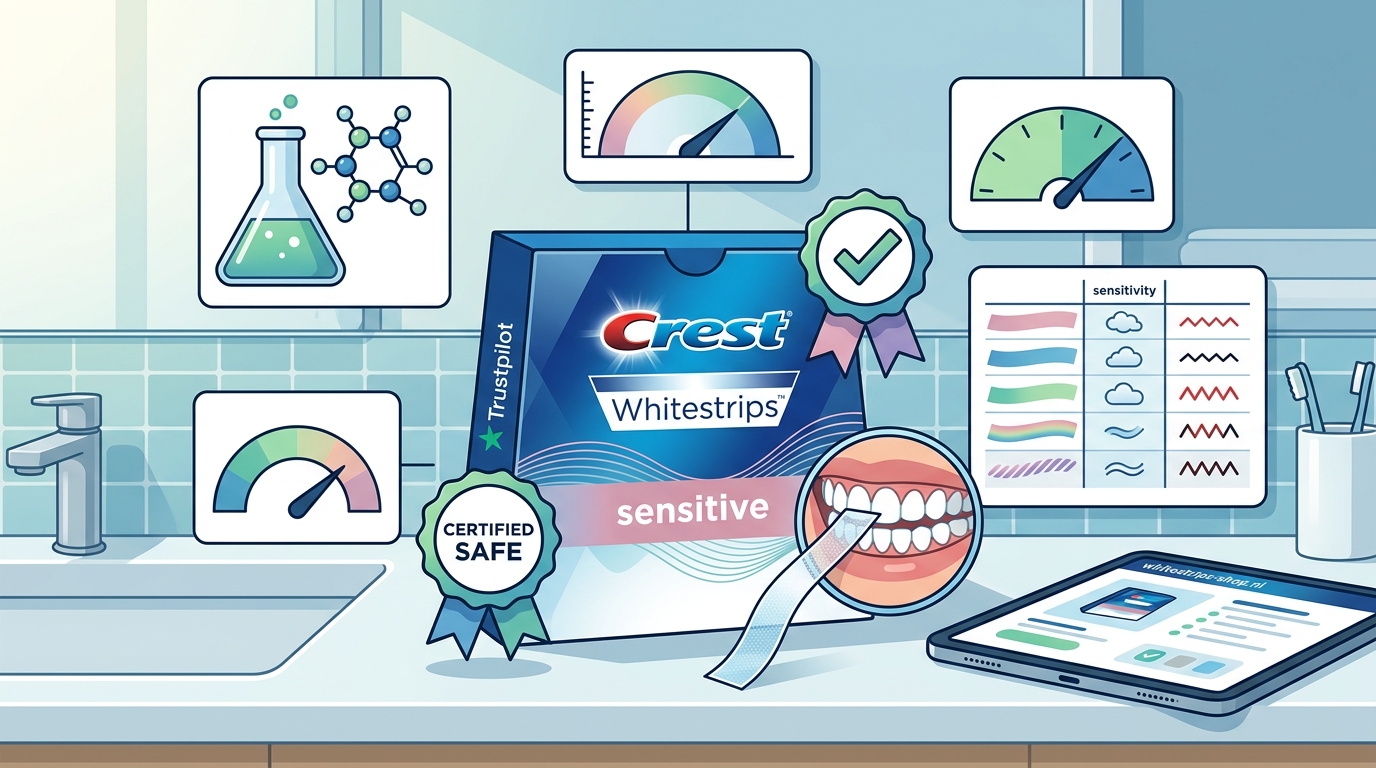
The physical fit of the strip determines how much of the gel contacts the gums. Gums are highly sensitive to peroxide. A strip that fits poorly can cause gel leakage, leading to chemical burns or severe gum irritation. The Dental Health Foundation emphasizes that flexible, thin materials that conform to the tooth contour are essential for minimizing gum exposure.
Product Comparison: Sensitive Options
Based on the inventory available at whitestrips-shop.nl, we can evaluate specific Crest Whitestrips variants designed for sensitivity. The following table compares the most relevant options for users prioritizing comfort.
| Product Name | Target Sensitivity Level | Key Feature | Duration | Price Range (EUR) |
|---|---|---|---|---|
| Crest Sensitive White | High Sensitivity | Gentle formula for soft make-over | 7-14 days | €42.95 - €65.95 |
| Crest Glamorous White | Moderate Sensitivity | Natural white finish | 7-14 days | €44.95 - €69.95 |
| Crest Professional Effects | Low Sensitivity | Deep stain removal | 10-20 days | €49.95 - €79.95 |
| Crest Age Renewal | Variable Sensitivity | Hard-to-remove yellow stains | 10-20 days | €59.95 - €94.95 |
The Crest Sensitive White variant is specifically engineered for those who experience pain with standard whitening agents. It uses a lower concentration of peroxide to provide a gentle yet effective treatment. The NHS states that while results may be more gradual, the safety profile for sensitive teeth is superior to high-strength alternatives.
Optimal Application Protocol
Even with the most sensitive-friendly strips, application technique plays a crucial role in minimizing discomfort. Improper application can lead to uneven gel distribution and increased sensitivity.
Pre-Treatment Preparation
Before applying strips, ensure your teeth are clean and dry. Moisture can interfere with the adhesion of the strip, causing it to slide and expose gums to the bleaching agent. Colgate recommends using a soft-bristled toothbrush to remove surface debris without irritating the gums further.
Application Timing
Do not exceed the recommended wear time. Leaving strips on longer than directed does not increase whitening efficacy but significantly increases the risk of sensitivity. For sensitive teeth, it is often advisable to start with shorter sessions, such as 30 minutes, and gradually increase to the full recommended duration as your teeth adjust.
Post-Treatment Care
After removing the strips, rinse your mouth with water to remove any residual peroxide. Avoid consuming hot or cold foods and beverages for at least 30 minutes. The Mouth Healthy organization highlights that teeth are more porous immediately after whitening and are susceptible to staining and sensitivity triggers.
Long-Term Maintenance and Safety
Maintaining a white smile without compromising dental health requires a strategic approach. Over-whitening is a common mistake that leads to long-term sensitivity and enamel damage.
Frequency of Use
Adhere strictly to the recommended treatment frequency. For sensitive teeth, spacing out treatments or using maintenance strips less frequently can help preserve enamel integrity. The American Dental Association advises consulting with a dentist before starting any whitening regimen if you have existing dental work or severe sensitivity.
Complementary Products
Using a desensitizing toothpaste before and during your whitening treatment can provide additional protection. Whitestrips-shop.nl offers a range of Crest toothpastes, including those formulated for sensitivity relief. These products contain potassium nitrate and stannous fluoride, which help block pain signals and strengthen enamel.
Key Takeaways
- Lower Concentration is Safer: Choose strips with lower peroxide concentrations, such as the Crest Sensitive White variant, to minimize nerve irritation.
- Look for Desensitizing Agents: Products containing potassium nitrate or fluoride offer dual benefits of whitening and pain relief.
- Fit Matters: Flexible strips that conform to your teeth reduce gum exposure and subsequent sensitivity.
- Follow Timing Strictly: Exceeding recommended wear times increases sensitivity risk without improving results.
- Use Complementary Care: Incorporate desensitizing toothpaste into your routine to maintain comfort during treatment.
- Consult a Professional: If you have severe sensitivity or dental work, consult your dentist before starting whitening.
- Brand Authenticity: Purchase from authorized retailers like whitestrips-shop.nl to ensure product efficacy and safety.
Frequently Asked Questions
Can I use whitening strips if I have sensitive teeth?
Yes, you can use whitening strips if you have sensitive teeth, provided you choose a product specifically designed for sensitivity. Products like Crest Sensitive White use lower peroxide concentrations to reduce the risk of pain.
How long does it take for whitening strips to work on sensitive teeth?
Whitening strips for sensitive teeth typically take 7 to 14 days to show visible results. Because the peroxide concentration is lower, the process is more gradual but safer for your dental nerves.
What is the best whitening strip for severe sensitivity?
The best option for severe sensitivity is a strip with a gentle formula and desensitizing agents. Crest Sensitive White is highly rated for this purpose, offering a soft make-over with minimal irritation.
Do whitening strips damage enamel?
When used as directed, whitening strips do not damage enamel. However, overuse or using high-concentration products on already compromised enamel can lead to sensitivity and erosion. The American Dental Association confirms that OTC whitening products are safe when used according to instructions.
How can I reduce sensitivity during whitening?
To reduce sensitivity, use a desensitizing toothpaste before treatment, avoid hot or cold foods immediately after application, and do not exceed the recommended wear time. Healthline suggests taking a pain reliever before treatment if you are prone to discomfort.
Are Crest Whitestrips safe for sensitive teeth?
Crest Whitestrips are generally safe for sensitive teeth, particularly the Sensitive White and Glamorous White variants. These products are formulated to balance efficacy with comfort. Whitestrips-shop.nl provides detailed information on product safety and usage.
Can I use whitening strips if I have dental fillings?
Whitening strips will not whiten fillings, crowns, or veneers. They are safe to use around these restorations, but the whitening effect will only be visible on your natural teeth. The NHS notes that this can lead to uneven coloration, so consult your dentist for the best approach.
Shop Sensitive Whitening Solutions
Protect your smile while achieving the white teeth you desire. Explore our curated selection of sensitive-friendly whitening strips at whitestrips-shop.nl. We offer authentic, USA-imported products with fast delivery and a satisfaction guarantee. Visit our blog for more tips on maintaining a healthy, radiant smile.