

Deep yellow stains are often the result of decades of enamel erosion and intrinsic discoloration, not just surface debris. According to the American Dental Association, over-the-counter whitening products can effectively remove extrinsic stains, but they cannot alter the natural color of your teeth or fix intrinsic discoloration caused by trauma or aging. Attempting to force a white result on deeply stained teeth without understanding the chemical limits of peroxide often leads to severe sensitivity and irreversible enamel damage. This guide outlines the critical errors consumers make when using Crest Whitestrips and similar at-home systems, ensuring you achieve the best possible result without compromising your oral health. (Contact 8211 Whitestrips shop)
Ignoring Enamel Thickness and Sensitivity
One of the most dangerous misconceptions in at-home whitening is the belief that stronger is always better. When you have deep yellow stains, the temptation is to leave strips on for hours or use multiple layers simultaneously. This approach ignores the biological reality of your tooth structure. Enamel is the hard, protective outer layer of your teeth that cannot regenerate once lost.
When you overload your teeth with hydrogen peroxide or carbamide peroxide, the chemical penetrates the enamel to reach the dentin. If the enamel is already thin due to age or acid erosion, the peroxide reaches the nerves directly. This causes "zingers," or sharp, shooting pains in the teeth. According to clinical studies on dental bleaching, sensitivity is the most common side effect, affecting up to 45% of users who do not follow dosage guidelines strictly. Whitestrips-shop.nl offers specific variants like the Sensitive White line, which is formulated to reduce this risk by using a lower concentration of peroxide over a longer period.
To avoid this, you must respect the treatment timeline. Never exceed the recommended wear time of 30 to 60 minutes per day. If you experience persistent pain, stop immediately and switch to a desensitizing toothpaste. The goal is gradual lightening, not instant bleaching.
Misapplying Strips to Gums
Proper application is just as important as the product itself. A frequent error is placing the whitening strip incorrectly, allowing the adhesive gel to touch the gingiva (gums). Gingiva is the soft tissue surrounding the base of the teeth that protects the underlying bone and tooth roots.
When peroxide gel contacts the gums, it causes chemical burns. This manifests as white, irritated patches on the gum tissue that can be painful and take several days to heal. It also leads to uneven whitening results because the strip may slide during wear, leaving streaks of yellow stain next to fully whitened areas. To prevent this, ensure your teeth are completely dry before applying the strip. Moisture prevents the adhesive from bonding correctly, causing the strip to migrate. Use a cotton swab or tissue to dry the teeth thoroughly before application.
If you have irregular tooth shapes or crowding, standard strips may not fit perfectly. In these cases, consider custom-fitted trays or products designed for irregular teeth. Always smooth the strip down with your finger to ensure full contact with the enamel surface and no overhang onto the gums.
Overusing High-Concentration Products
Many consumers believe that using Crest Whitestrips Professional Effects or the 1Hour Express variants daily for the maximum duration will yield the best results. This is a critical error. Professional Effects is a high-intensity treatment designed to remove up to 18 years of stains, but it requires strict adherence to the 10 to 20 treatment schedule.
Overusing these products does not make your teeth whiter; it makes them translucent. When enamel becomes overly dehydrated and porous from excessive peroxide exposure, light reflects through the tooth differently, giving it a gray or blueish tint rather than a bright white. This is known as "over-bleaching." Furthermore, the American Dental Association warns that excessive use of whitening agents can lead to permanent damage to the tooth pulp. Stick to the recommended frequency. If you have completed a course of Professional Effects and still desire more brightness, wait at least three months before starting another treatment to allow your teeth to rehydrate and remineralize.
Neglecting Maintenance and Touch-Ups
Whitening is not a permanent solution. Deep yellow stains often return because the underlying causes, such as diet and aging, continue. A major mistake is expecting the results of a 10-day treatment to last forever without maintenance. According to data from dental professionals, the results of at-home whitening typically last from six months to two years, depending on lifestyle habits. Remineralization is the process by which minerals like calcium and phosphate are deposited back into the enamel to strengthen it after acid attacks.
To maintain your results, use the Vivid White or Gentle Routine strips for touch-ups every few months. Additionally, incorporate a whitening toothpaste like the Crest 3D White Brilliance into your daily routine. This helps remove surface stains before they penetrate deep into the enamel. Neglecting this maintenance phase leads to a rapid return of the yellow hue, causing users to restart aggressive whitening cycles, which further damages the teeth.
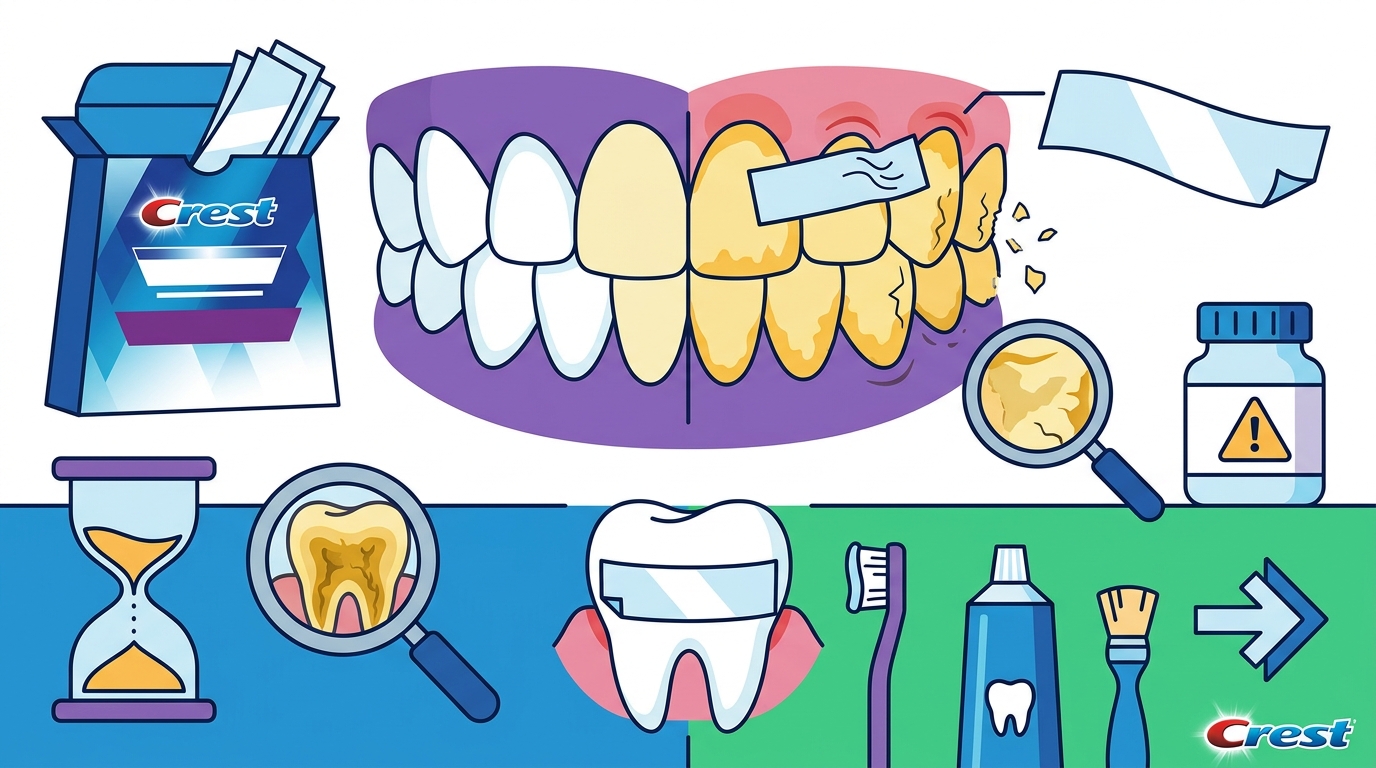
Assuming All Stains Are Equal
Not all yellow stains are created equal. Some are extrinsic, sitting on the surface due to coffee, tea, or wine. Others are intrinsic, caused by tetracycline antibiotics, fluorosis, or trauma. Intrinsic stains are discolorations that originate within the tooth structure and cannot be removed by surface-level bleaching agents.
If you have deep yellow stains caused by intrinsic factors, over-the-counter strips will have little to no effect. Attempting to force a result with these products only wastes money and increases the risk of sensitivity. In such cases, professional in-office whitening or veneers are the only viable options. It is crucial to have a dental professional evaluate the type of stain before starting any at-home regimen. Whitestrips-shop.nl provides a range of products, but no strip can replace professional diagnosis for complex discoloration.
Comparison of Whitening Approaches for Deep Stains
| Method | Best For | Risk Level | Duration of Results |
|---|---|---|---|
| Crest Professional Effects | Extrinsic stains from food and drink | Moderate (Sensitivity) | Up to 12 months |
| Crest Sensitive White | Users with low enamel or pain | Low | Up to 9 months |
| Crest 1Hour Express | Last-minute events | High (Short-term sensitivity) | Up to 6 months |
| Professional In-Office | Intrinsic or severe discoloration | Low (Controlled environment) | 1 to 3 years |
Key Takeaways
- Enamel does not regenerate; excessive peroxide exposure leads to permanent translucency and sensitivity.
- Gum irritation is caused by improper application, not the product itself, so always dry teeth before use.
- Professional Effects is designed for 10 to 20 treatments, not continuous daily use beyond the recommended period.
- Intrinsic stains from trauma or medication cannot be removed by at-home strips and require professional intervention.
- Results last between six months and two years, requiring regular touch-ups with Vivid White or maintenance toothpaste.
- Sensitivity is a common side effect, affecting nearly half of users who do not follow dosage guidelines.
- Whitestrips-shop.nl offers a 100% money-back guarantee if you experience adverse reactions, ensuring safe experimentation.
Frequently Asked Questions
Can Crest Whitestrips remove deep yellow stains completely?
Crest Whitestrips can significantly lighten deep yellow stains caused by extrinsic factors like coffee and aging. However, they cannot restore teeth to their natural, genetic shade. If the yellowing is intrinsic, results will be limited.
Why do my teeth hurt after using whitening strips?
Pain occurs when peroxide penetrates the enamel and irritates the tooth nerve. This is often due to overuse, pre-existing sensitivity, or improper application. Switching to the Sensitive White variant or reducing wear time can alleviate this.
How long should I wait between whitening cycles?
You should wait at least three months between intensive whitening cycles to allow your enamel to rehydrate and remineralize. Continuous use can lead to permanent damage and increased sensitivity.
Are Crest Whitestrips safe for sensitive teeth?
Yes, but you must choose the right product. The Crest Sensitive White strips are specifically formulated with a lower concentration of peroxide to minimize pain while still providing effective whitening for mild to moderate stains.
Can I use whitening strips if I have crowns or veneers?
No, whitening strips will not change the color of crowns, veneers, or fillings. This can result in a mismatched smile where your natural teeth become white but your restorations remain yellow. Consult your dentist before starting treatment.
What is the difference between Professional Effects and Vivid White?
Professional Effects uses a higher concentration of peroxide to remove up to 18 years of stains in 10 to 20 treatments. Vivid White is a maintenance product with a lower concentration, designed for 5 to 10 treatments to keep teeth white.
How does Whitestrips-shop.nl ensure product authenticity?
Whitestrips-shop.nl guarantees that all products are 100% original USA products, sourced directly from authorized distributors. They offer a 100% money-back guarantee if you suspect the product is not authentic or effective.
Start Your Safe Whitening Journey Today
Avoiding these common mistakes is the key to achieving a brighter smile without compromising your oral health. By selecting the right product for your specific stain type and adhering to strict application guidelines, you can safely lighten deep yellow stains. Visit Whitestrips-shop.nl to explore our full range of authentic Crest Whitestrips and find the perfect solution for your needs. Remember, consistency and caution are your best tools for a radiant, healthy smile.