

Teeth sensitivity affects approximately 40% of the adult population, making the choice of whitening method a critical decision for oral health. According to the American Dental Association, using products with high concentrations of peroxide without proper guidance can significantly exacerbate nerve pain. This guide details how to safely achieve a brighter smile while protecting your enamel and reducing discomfort.
1. Ignoring Product Formulation for Sensitive Gums
The most frequent error is selecting a standard whitening strip when your teeth are prone to pain. Standard strips often utilize high concentrations of hydrogen peroxide, which can penetrate the enamel and irritate the dental pulp. Desensitizing whitening strips are formulated with lower peroxide levels and added potassium nitrate to calm nerve endings.
When browsing options, look for products specifically labeled for sensitive teeth. At Whitestrips-shop.nl, we offer specialized variants like Crest Whitestrips Sensitive White that are designed to remove stains gently. These products provide a safer alternative for individuals who experience sharp pain during standard treatments.
2. Exceeding Recommended Wear Time
Many users believe that leaving strips on longer will yield whiter teeth. This is a dangerous misconception. Prolonged exposure to bleaching agents does not increase whitening efficacy but does increase the risk of chemical burns on the gums and severe tooth sensitivity. Adhering strictly to the manufacturer's time limits is essential for safety.
For instance, Crest Whitestrips Professional Effects typically require 30 minutes of wear. Extending this time can lead to uneven whitening and increased discomfort. Always set a timer and remove the strips exactly when the clock runs out.
3. Skipping Desensitizing Pre-Treatment
Approaching whitening without preparation leaves your teeth vulnerable to shock. A common mistake is applying strips directly to untreated, sensitive teeth. Pre-treating with a desensitizing toothpaste can create a protective barrier and reduce initial pain.
We recommend using a Crest Sensitivity Relief Toothpaste for at least two weeks before starting your whitening regimen. This allows the active ingredients to block the tubules in your enamel, reducing the pathway for pain signals to reach the nerve.
4. Using Strips on Dry Teeth
Whitening strips rely on moisture to activate the peroxide gel and adhere properly to the tooth surface. Applying them to dry teeth can cause the strip to slip, leading to uneven application and increased contact with the gums. Always ensure your teeth are clean and slightly damp before application.
Rinse your mouth with water and gently pat your teeth with a towel to remove excess saliva, but leave a slight moisture layer. This ensures the strip sticks correctly and the whitening agent works evenly across the surface.
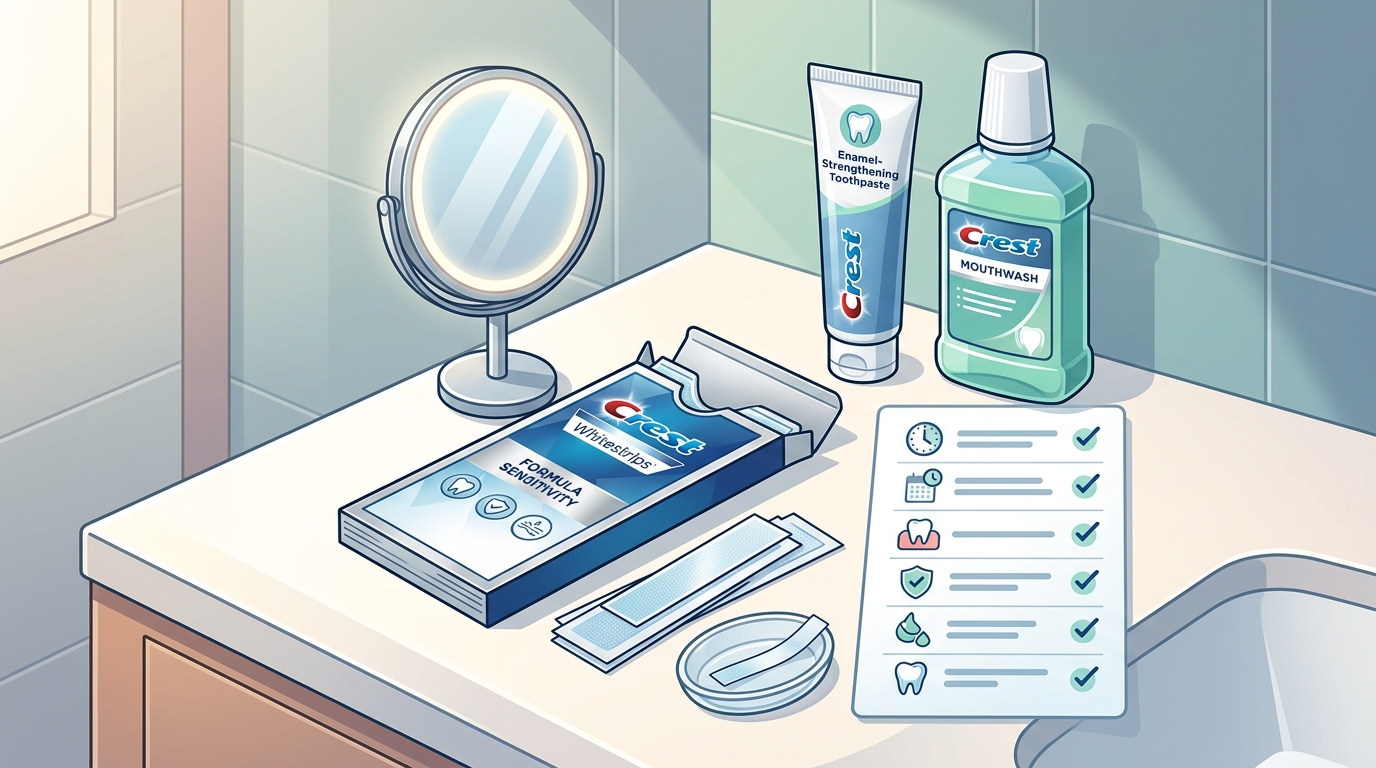
5. Neglecting Post-Whitening Care
Your teeth are more porous immediately after whitening, making them susceptible to staining and sensitivity. Ignoring post-treatment care can reverse your results quickly. Avoid dark-colored foods and drinks for at least 48 hours after each session.
Staining agents such as coffee, red wine, and berries can penetrate the open enamel pores. If you must consume these items, use a straw to minimize contact with your teeth. Follow up with a Crest 3D White Brilliance Toothpaste to maintain the brightness and protect the enamel.
6. Ignoring Gum Irritation
White patches on the gums after removing strips are a sign of peroxide burn. Many users ignore this symptom and continue their treatment, causing further damage. If you experience gum irritation, stop treatment immediately and allow your gums to heal.
Rinsing with warm salt water can soothe irritated gums. Once the irritation subsides, you may resume treatment with a lower-strength product, such as Crest Whitestrips Vivid White, which is gentler on soft tissues.
7. Expecting Instant Results
Patience is crucial when dealing with sensitive teeth. Rushing the process by whitening daily without breaks can lead to chronic sensitivity. Allowing your teeth to rest between sessions helps the enamel recover and reduces long-term pain.
Most effective whitening programs require 10 to 20 days for visible results. Consistency is more important than speed. For those needing a quick boost, Crest Whitestrips 1Hour Express offers a faster option, but should be used with caution and only when necessary.
Comparison of Whitening Options for Sensitive Teeth
| Product Type | Best For | Wear Time | Sensitivity Level |
|---|---|---|---|
| Crest Sensitive White | Daily gentle whitening | 30 minutes | Low |
| Crest Professional Effects | Deep stain removal | 30 minutes | Moderate |
| Crest 1Hour Express | Last-minute events | 60 minutes | High |
| Crest Vivid White | Maintenance | 30 minutes | Low |
Key Takeaways
- Choose strips specifically labeled for sensitive teeth to minimize pain.
- Never exceed the recommended wear time to avoid gum burns.
- Use desensitizing toothpaste for two weeks prior to treatment.
- Ensure teeth are slightly damp for proper strip adhesion.
- Avoid staining foods and drinks for 48 hours post-treatment.
- Stop treatment immediately if gum irritation occurs.
- Allow rest days between sessions to protect enamel health.
Frequently Asked Questions
Can I use whitening strips if I have sensitive teeth?
Yes, you can use whitening strips if you have sensitive teeth, provided you choose a product designed for sensitivity. Look for strips with lower peroxide concentrations and added desensitizing agents like potassium nitrate.
How long should I wait between whitening sessions?
It is recommended to wait at least one to two weeks between full whitening cycles to allow your teeth and gums to recover. This rest period helps reduce the risk of chronic sensitivity.
What should I do if my gums turn white after using strips?
White patches on the gums indicate peroxide irritation. Remove the strips immediately, rinse your mouth with warm salt water, and allow the gums to heal before resuming treatment.
Is it safe to use whitening strips every day?
Most whitening strips are designed for daily use during the treatment period, typically lasting 10 to 20 days. However, if you experience increased sensitivity, reduce the frequency to every other day.
How can I reduce pain during whitening?
To reduce pain, pre-treat your teeth with desensitizing toothpaste, ensure your teeth are slightly damp before application, and avoid wearing the strips for longer than recommended.
Can I drink coffee while using whitening strips?
You should avoid drinking coffee during the treatment period and for at least 48 hours after each session. Coffee is a major staining agent that can counteract the whitening effects.
What is the best whitening strip for sensitive teeth?
Crest Whitestrips Sensitive White is widely regarded as the best option for sensitive teeth due to its gentle formula and effective stain removal without causing significant discomfort.
Start Your Safe Whitening Journey Today
Avoiding these common mistakes ensures a safer, more effective whitening experience. Protect your smile by choosing the right products and following proper application techniques. Visit Whitestrips-shop.nl to explore our full range of sensitive-friendly whitening solutions and book your consultation for personalized advice.