

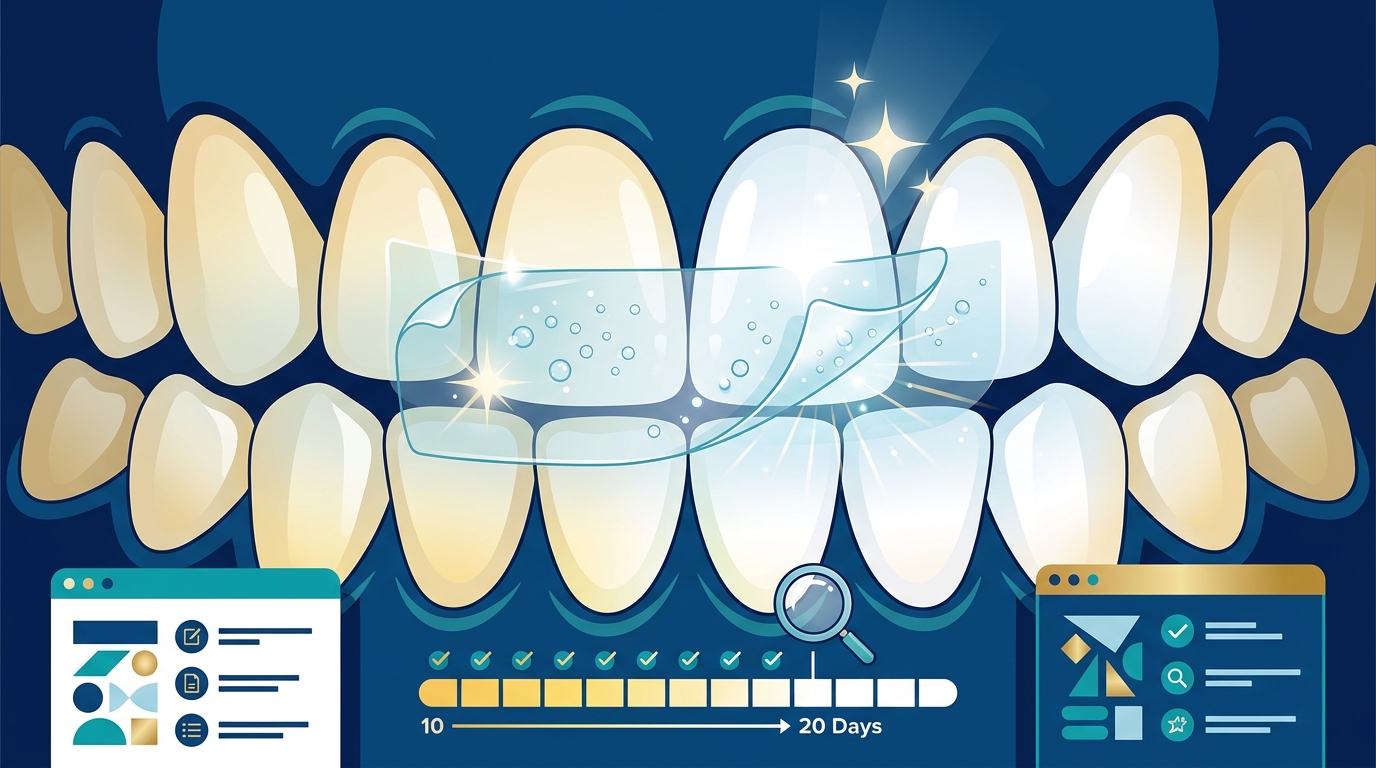
At-home whitening strips are a proven, effective solution for removing surface stains and brightening teeth by up to 18 shades. According to clinical data, consistent use of peroxide-based strips can significantly alter tooth coloration within 10 to 20 days. This guide explains the science behind the results and how to achieve them safely.
The Science of Whitening Strips
Whitening strips work through a process called oxidation. The active ingredient, typically hydrogen peroxide or carbamide peroxide, penetrates the porous enamel of your teeth. Once inside, it breaks down into oxygen molecules that attack and dissolve stain particles trapped within the tooth structure. This chemical reaction lightens the overall color of the tooth without damaging the enamel surface.
Whitening strips are thin, flexible plastic films coated with a high-concentration whitening gel. They adhere to the front surface of the teeth, ensuring the gel remains in contact with the stained areas for the recommended duration. This targeted delivery system is what makes at-home whitening more effective than traditional brushing or rinsing methods.
The efficacy of these strips depends on the concentration of the peroxide and the duration of wear. Higher concentrations yield faster results but may increase sensitivity. Lower concentrations require longer treatment periods but are generally gentler on the gums. Understanding this balance is crucial for achieving optimal results without discomfort.
Effectiveness on Different Types of Stains
Not all stains respond equally to at-home treatments. It is essential to distinguish between extrinsic and intrinsic stains to set realistic expectations. Extrinsic stains occur on the surface of the enamel due to external factors. Intrinsic stains originate within the tooth structure, often due to trauma or aging.
Extrinsic Stains: Coffee, Tea, and Wine
Extrinsic stains are the most responsive to whitening strips. Daily consumption of dark beverages like coffee, tea, and red wine leaves tannins on the tooth surface. These tannins bind to the enamel, creating a yellow or brown discoloration. Whitening strips are highly effective at breaking down these surface deposits. Users typically notice a visible difference after just a few applications.
Intrinsic Stains: Aging and Medication
Intrinsic stains are more challenging to treat. As teeth age, the enamel thins, revealing the yellow dentin layer underneath. This natural aging process creates a dull, yellowed appearance. While whitening strips can brighten the overall tone, they cannot reverse the structural changes of aging completely. Similarly, stains caused by certain medications, such as tetracycline, are deeply embedded and may require professional dental intervention for significant improvement.
Tobacco Stains
Tobacco use leaves stubborn tar and nicotine stains on the teeth. These stains are often thick and resistant to mild whitening agents. Stronger formulations, such as those found in professional-grade strips, are necessary to tackle tobacco discoloration. Consistent use is key, as tobacco stains tend to reaccumulate quickly if oral hygiene is not maintained.
Choosing the Right Whitening Strips
Selecting the correct product is vital for both safety and efficacy. The market offers various tiers of whitening strips, each designed for specific needs and sensitivity levels. Understanding the differences ensures you choose a product that aligns with your dental health goals.
| Product Type | Peroxide Strength | Best For | Expected Results |
|---|---|---|---|
| Crest 3D Whitestrips Professional Effects | Medium-High | General yellowing and moderate stains | Up to 18 shades whiter |
| Crest 3D Whitestrips Sensitive White | Low-Medium | Sensitive teeth and mild discoloration | Gradual, gentle brightening |
| Crest 3D Whitestrips Age Renewal | High | Deep-set stains and aging yellowing | Up to 23 shades whiter |
When browsing options, look for products that offer a balance between strength and comfort. Crest Whitestrips are widely recognized for their clinical backing and consistent performance. They provide a reliable standard for at-home whitening, ensuring that users receive a safe and effective treatment.
Step-by-Step Application Guide
Proper application is just as important as the product itself. Incorrect usage can lead to uneven whitening or gum irritation. Follow these steps to maximize your results and minimize risks.
Preparation
Begin by brushing your teeth gently to remove any plaque or debris. Do not use whitening toothpaste immediately before application, as it may leave a residue that interferes with the gel. Dry your teeth with a tissue or cotton swab. Moisture can prevent the strips from adhering properly, reducing their effectiveness.
Application
Remove the strip from the tray and identify the top and bottom. The gel-coated side should face your teeth. Align the strip with the center of your upper teeth and press it firmly into place. Smooth it down along the gum line to ensure full contact. Repeat for the lower teeth if using a two-step kit. Avoid stretching the strips, as this can cause them to lose their shape and adhesion.
Duration and Removal
Leave the strips on for the recommended time, typically 30 to 60 minutes. Do not exceed the recommended duration, as this can increase sensitivity without providing additional whitening benefits. After the time is up, remove the strips and discard them. Rinse your mouth with water to remove any residual gel. You can resume normal activities immediately, but avoid eating or drinking for at least 30 minutes to allow the whitening agents to continue working.
Safety and Sensitivity Management
While whitening strips are generally safe, they can cause temporary tooth sensitivity and gum irritation. This is a common side effect of the peroxide penetrating the enamel. Understanding how to manage these symptoms ensures a comfortable whitening experience.
Tooth sensitivity usually manifests as a sharp, fleeting pain when exposed to hot or cold temperatures. This typically subsides shortly after the treatment course is completed. To mitigate sensitivity, consider using a desensitizing toothpaste for two weeks prior to starting whitening. Apply the toothpaste to the gums before placing the strips to create a protective barrier.
Gum irritation can occur if the gel touches the soft tissue. This results in a white, chalky appearance on the gums that fades within a few hours. To prevent this, ensure the strips are applied correctly and do not extend too far onto the gums. If irritation persists, reduce the frequency of use or switch to a lower-strength formula.
It is crucial to consult with a dentist before starting any whitening regimen if you have existing dental issues. Conditions such as cavities, gum disease, or exposed roots can be exacerbated by whitening agents. A professional evaluation ensures that your teeth are healthy enough to undergo the treatment safely.
Key Takeaways
- Whitening strips use peroxide to oxidize and break down stain particles within the enamel.
- Extrinsic stains from coffee and wine respond best to at-home whitening treatments.
- Intrinsic stains from aging or medication may require professional dental procedures for significant improvement.
- Crest 3D Whitestrips Professional Effects offers a balanced approach for most users seeking noticeable results.
- Sensitivity is a common side effect that can be managed with desensitizing toothpaste and proper application techniques.
- Consistent use over 10 to 20 days is required to achieve the maximum whitening potential.
- Always consult a dentist if you have pre-existing dental conditions before starting whitening.
Frequently Asked Questions
How long does it take for whitening strips to work?
Most users notice visible results within 3 to 5 days. Full results are typically achieved after completing the recommended 10 to 20 day treatment course. Consistency is key to maintaining the brightness.
Can whitening strips damage my enamel?
When used as directed, whitening strips do not damage enamel. The peroxide concentration is regulated to be safe for home use. Overuse or exceeding the recommended time can lead to sensitivity but not structural damage.
Are whitening strips safe for sensitive teeth?
Yes, there are specific formulations designed for sensitive teeth. Crest 3D Whitestrips Sensitive White uses a lower concentration of peroxide to minimize discomfort while still providing effective whitening.
How often can I use whitening strips?
Whitening strips should be used according to the product instructions, typically once daily. For maintenance, you can use them every 3 to 6 months, depending on your diet and lifestyle factors.
Do whitening strips work on dental crowns or veneers?
No, whitening strips only work on natural tooth structure. They will not change the color of crowns, veneers, or fillings. This can result in a mismatched appearance if you have restorative work on your front teeth.
What should I avoid while using whitening strips?
Avoid dark-colored foods and beverages for at least 48 hours after treatment. Coffee, red wine, and berries can re-stain the teeth while the enamel is more porous. Smoking should also be avoided to maintain results.
Can I use whitening strips if I have gum disease?
It is not recommended to use whitening strips if you have active gum disease. The peroxide can irritate inflamed gums and delay healing. Consult your dentist to treat the underlying condition first.
Start Your Whitening Journey
Achieving a brighter, more confident smile is within reach with the right at-home solution. By understanding the science of whitening and selecting the appropriate product, you can effectively tackle stained teeth from the comfort of your home. Explore our curated selection of original Crest Whitestrips to find the perfect match for your dental needs. Visit our blog for more tips on oral care and maintenance. For personalized advice, contact our customer support team or review our FAQ for detailed guidance.