

Remove Coffee Stains from Teeth: Proven Methods That Actually Work
Coffee is one of the most popular beverages in the world, yet its dark pigments can leave stubborn stains on your teeth over time. The tannins in coffee cling to tooth enamel and gradually build a yellow or brown tint that regular brushing alone cannot fully reverse. The good news is that a range of solutions, from simple daily habits to hydrogen peroxide whitening strips, can restore your smile. In this guide we walk through the most effective methods for removing coffee stains so you can keep drinking what you love without sacrificing a bright, confident smile.
Why Does Coffee Stain Your Teeth?
Tannins are naturally occurring organic compounds found in coffee that adhere to tooth enamel and cause discoloration. Combined with the mild acidity of coffee, these tannins open microscopic pores in the enamel, allowing dark chromogens (colour pigments) to settle deeper into the tooth surface.
Extrinsic stains are surface-level discolorations caused by food, drink, or tobacco. Intrinsic stains sit beneath the enamel and require chemical whitening agents to lift. Most coffee stains start as extrinsic but can become intrinsic over months of daily consumption. Understanding the difference helps you choose the right removal method. Learn more about the causes of yellow teeth on our blog.
Daily Habits That Prevent Coffee Stains
Prevention is the easiest strategy. Rinsing your mouth with water immediately after drinking coffee washes away pigment particles before they bond to enamel. Drinking through a straw reduces direct contact between the liquid and your front teeth.
Brushing and Flossing Routine
Brushing at least twice a day and flossing once daily removes plaque, which is a sticky biofilm that absorbs coffee pigments and accelerates staining. Wait about 30 minutes after your last sip before brushing to avoid scrubbing acid-softened enamel. For a step-by-step routine, check out our five tips for whiter teeth.
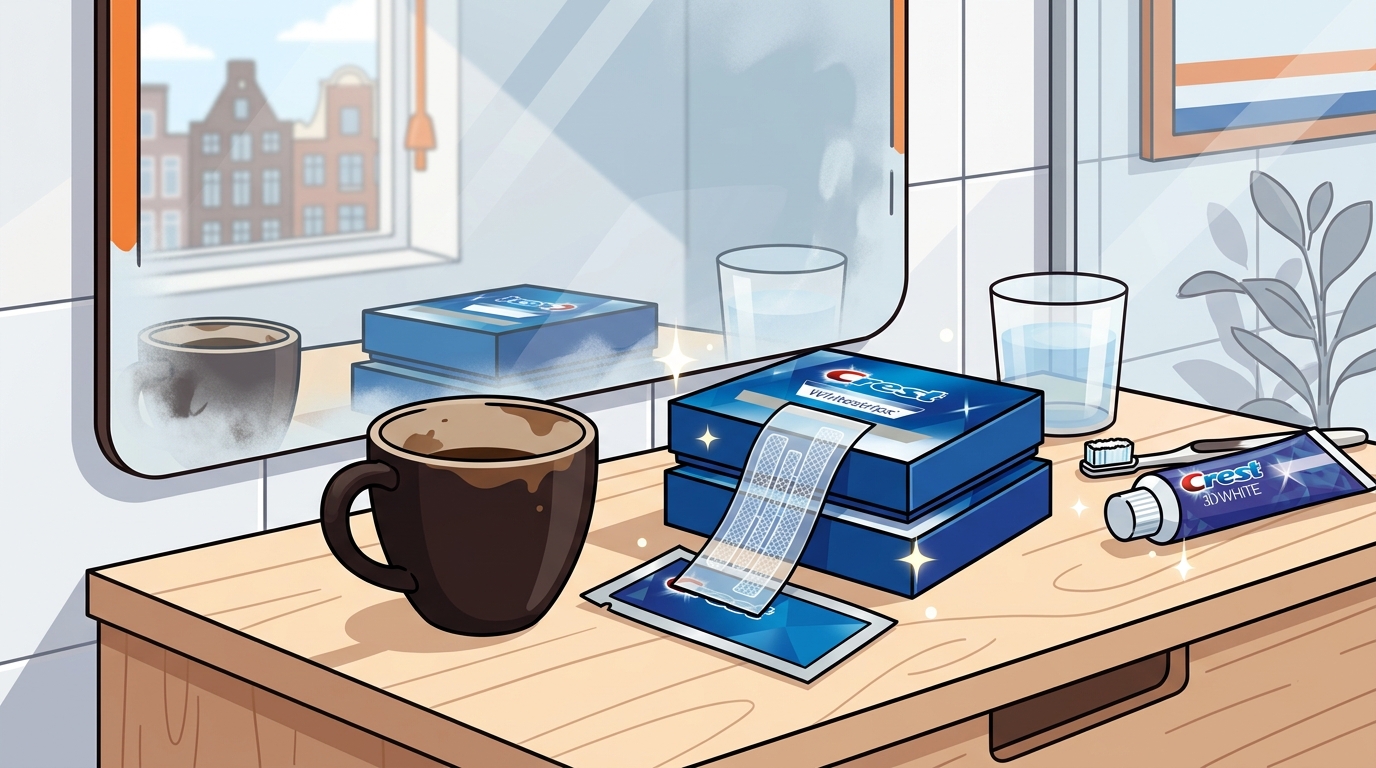
Whitening Toothpaste: Your First Line of Defence
Whitening toothpaste is a daily-use dental product that contains mild abrasives or chemical agents designed to remove surface stains and brighten teeth over time. A 2024 study published in the International Journal of Dentistry found that sodium hexametaphosphate-containing whitening toothpaste achieved roughly 81% lightness recovery on coffee-stained enamel after 10,000 brushing cycles, outperforming both hydrogen peroxide (71%) and sodium bicarbonate (72%) formulations.
For daily maintenance, a quality whitening toothpaste is a great starting point. The Crest 3DWhite Brilliance Deep Stain Remover toothpaste penetrates deeper to dissolve compounds that bind stains to the tooth surface.
Baking Soda as a Natural Remedy
Baking soda (sodium bicarbonate) is a mild abrasive powder that can help scrub away surface-level coffee stains without significant enamel damage when used sparingly. Mix a small amount with water to form a paste, apply it with a toothbrush, and gently brush for about two minutes before rinsing.
Limit this method to once or twice a week. Excessive use can wear down enamel over time, making teeth more susceptible to future staining. If you have sensitive teeth, consult your dentist before trying this approach.
Hydrogen Peroxide Whitening Strips: The Most Effective At-Home Option
Hydrogen peroxide whitening strips are thin, flexible plastic strips coated with an enamel-safe gel containing hydrogen peroxide as the active bleaching agent. Research consistently shows that hydrogen peroxide strips outperform whitening toothpaste for coffee stain removal because the peroxide penetrates enamel pores and chemically breaks apart pigment molecules rather than just scrubbing the surface.
How Whitening Strips Work
The strips release oxygen molecules from hydrogen peroxide that enter the enamel's microscopic pores and oxidise the coloured compounds responsible for discoloration. This chemical process reverses staining at a deeper level than any abrasive method. Read our full guide to whitening with Crest Whitestrips for detailed instructions.
Choosing the Right Strip
For moderate coffee stains, the Crest Whitestrips Glamorous White delivers up to 18 shades whiter teeth in 10 to 20 treatments. For heavy, long-term staining, the Crest 3D Whitestrips Radiant Express offers professional-level results in just 14 days. If you have sensitive teeth, the Crest 3D Whitestrips Sensitive with LED Light combines a mild formula with an LED accelerator for gentle yet powerful whitening.
Method Comparison: Effectiveness at a Glance
| Method | Best For | Time to Results | Effectiveness | Enamel Safety |
|---|---|---|---|---|
| Whitening toothpaste | Daily maintenance, mild stains | 2 to 4 weeks | Moderate | High (daily use safe) |
| Baking soda paste | Surface stains | 1 to 2 weeks | Moderate | Moderate (limit to 1-2x/week) |
| Hydrogen peroxide strips | Moderate to heavy stains | 7 to 14 days | High | High (follow instructions) |
| LED whitening kits | Deep, long-term stains | 5 to 10 days | Very high | High (proper use required) |
| Professional dental whitening | Severe or intrinsic stains | 1 to 2 sessions | Very high | Dentist-supervised |
When to Consider Professional Whitening
If home remedies and over-the-counter products do not deliver the results you want, professional teeth whitening performed by a dentist may be necessary. In-office treatments use higher concentrations of hydrogen peroxide or carbamide peroxide under controlled conditions, making them the fastest and most powerful option for severe coffee stains.
Professional whitening typically costs between EUR 300 and EUR 600 per session but can lighten teeth by several shades in a single appointment. For many coffee drinkers, however, at-home whitening strips provide comparable results at a fraction of the price. Explore the full Crest Whitestrips collection starting from just EUR 37.95.
Key Takeaways
- Coffee stains teeth because tannins and chromogens bind to enamel pores over time.
- Rinsing with water after coffee and using a straw are the simplest prevention strategies.
- Whitening toothpaste handles mild surface stains with daily use.
- Baking soda works as a gentle weekly abrasive but should not be overused.
- Hydrogen peroxide whitening strips are the most effective at-home solution, outperforming toothpaste according to clinical research.
- LED-enhanced whitening kits accelerate results for deep or long-standing stains.
- Professional dental whitening is the best choice for severe intrinsic discoloration.
Frequently Asked Questions
Do coffee stains on teeth go away on their own?
No. Surface stains may lighten slightly with consistent brushing, but established coffee stains require active whitening methods such as whitening toothpaste, baking soda, or hydrogen peroxide strips to fully remove.
How long does it take to remove coffee stains with whitening strips?
Most hydrogen peroxide whitening strips show visible results within 7 to 14 days of consistent use. Products like Crest 3D Whitestrips Radiant Express are designed to deliver professional-level results in 14 days.
Are whitening strips safe for enamel?
Yes, when used as directed. Crest Whitestrips use an enamel-safe hydrogen peroxide gel. Avoid exceeding the recommended treatment duration to prevent temporary sensitivity.
Can I drink coffee while using whitening strips?
It is best to avoid coffee for at least 30 minutes after removing the strips. Freshly treated enamel is more porous and susceptible to re-staining during this window.
Is baking soda safe for daily use on teeth?
No. Baking soda is mildly abrasive and should be limited to one or two uses per week. Overuse can erode enamel and increase sensitivity.
What whitening method works fastest on coffee stains?
Professional in-office whitening delivers the fastest results, often in a single session. For at-home use, hydrogen peroxide strips with an LED light offer the quickest improvement, typically within one week.
Do whitening strips work better than whitening toothpaste?
Research indicates that hydrogen peroxide strips are more effective than whitening toothpaste because the peroxide penetrates below the enamel surface to break apart deeper pigment molecules, rather than only addressing surface stains.
Where can I buy original Crest Whitestrips in the Netherlands?
You can order original Crest Whitestrips imported from the United States at Whitestrips-shop.nl, with prices starting at EUR 37.95 and next-day delivery throughout the Netherlands.
Ready to Remove Coffee Stains for Good?
Stop letting coffee dull your smile. Browse the complete range of original Crest Whitestrips at Whitestrips-shop.nl, choose the strength that matches your staining level, and enjoy next-day delivery with free shipping. Your brighter smile is just a few treatments away.