

Remove Coffee Stains From Teeth: 6 Proven Methods That Actually Work
Coffee is one of the most consumed beverages on the planet, but its dark pigments and acidic nature leave stubborn stains on tooth enamel over time. The tannins in coffee cling to microscopic ridges in your enamel, creating a yellowish or brownish discolouration that regular brushing alone cannot fully eliminate. The good news? You do not have to choose between your morning ritual and a bright smile. In this guide we walk through six effective methods, from simple home remedies to professional-grade whitening strips, so you can find the approach that fits your lifestyle and budget.
Why Coffee Stains Your Teeth
Tannins are a type of polyphenol found in coffee that bind easily to proteins in your tooth enamel. Once attached, they attract additional food particles and pigments, deepening the discolouration with every cup. Enamel itself is not perfectly smooth; it contains tiny pits and grooves where stain molecules settle in.
Acidity plays a role too. Coffee has an average pH of around 5, which softens enamel temporarily and makes it more susceptible to staining. Understanding these causes helps you pick the right removal strategy below.
Method 1 – Consistent Oral Hygiene
Regular dental hygiene is the simplest and most effective way to combat coffee stains. Brushing at least twice a day and flossing once daily removes the plaque layer that absorbs pigments from beverages like coffee. Pair your routine with a whitening toothpaste that carries the ADA Seal of Acceptance for safe, gradual brightening.
If you are exploring which products complement your brushing routine, our five tips for whiter teeth guide covers toothpaste and mouthwash options in detail.
Method 2 – Baking Soda Paste
Baking soda is a mild abrasive that helps scrub away surface stains without damaging healthy enamel when used correctly. Mix half a teaspoon of baking soda with a few drops of water to form a paste, apply it to your toothbrush, and brush gently for about two minutes. Rinse thoroughly afterwards.
Limit this method to once or twice per week. Overuse can gradually wear down enamel, so treat it as a supplement to your daily routine rather than a replacement.
Method 3 – Hydrogen Peroxide Rinse
Hydrogen peroxide is a bleaching agent commonly used in both home and professional teeth-whitening products. For a DIY rinse, dilute a 3% hydrogen peroxide solution with equal parts water and swish for 60 seconds before spitting it out. Always rinse with plain water afterwards and avoid swallowing the mixture.
You can also combine hydrogen peroxide with baking soda for a more potent paste. This is the same active ingredient found in many professional whitening strips, albeit at a lower concentration.
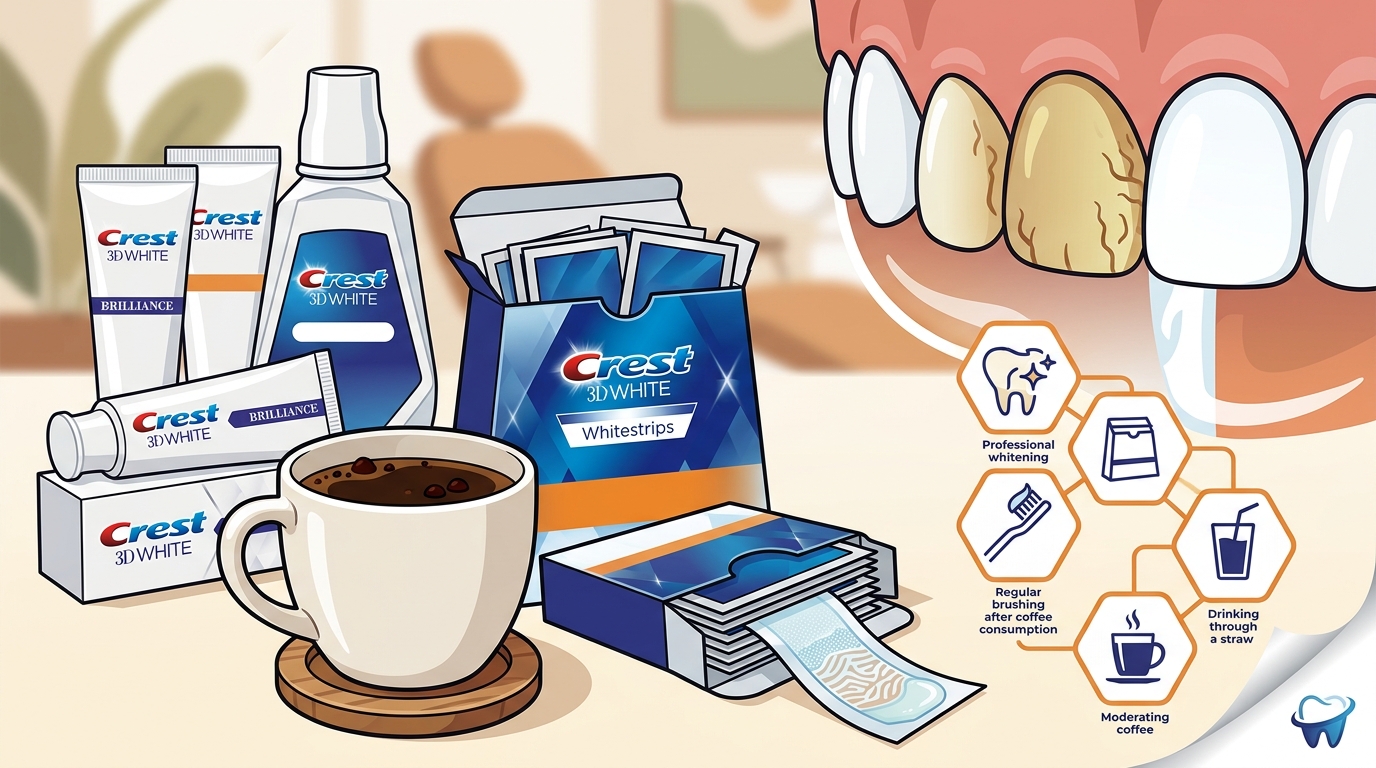
Method 4 – Whitening Strips (Most Effective At-Home Option)
Whitening strips are thin, flexible plastic strips coated with a peroxide-based whitening gel. They conform to the shape of your teeth and deliver a controlled dose of the active ingredient directly to the enamel surface. This makes them significantly more effective than toothpaste alone.
Why Crest Whitestrips Stand Out
Crest Whitestrips are the number-one dentist-recommended at-home whitening brand in the United States. The Crest Whitestrips Professional Effects variant can make teeth up to 18 shades whiter in just 20 days, with results lasting up to 12 months. For lighter staining, the Crest Whitestrips Glamorous White is ADA-approved and delivers up to 8 shades of improvement in 14 days.
How to Apply
Rinse your mouth with water before application but do not brush with toothpaste immediately beforehand. Peel the strip from its backing, press it onto your teeth, and leave it on for the recommended time (30 to 60 minutes depending on the variant). Full instructions are available on our usage guide page.
Method 5 – Professional Dental Cleaning
For deeply ingrained stains that home methods cannot reach, a professional cleaning or in-office whitening treatment may be necessary. During a cleaning, a dental hygienist uses specialised tools to remove tartar and surface stains in a single visit. In-office bleaching treatments use high-concentration peroxide gels activated by light, producing dramatic results in about an hour.
The downside is cost. Professional whitening can range from EUR 300 to EUR 800 per session in the Netherlands, making at-home alternatives like whitening strips a popular choice for budget-conscious consumers. Learn more about what causes yellow teeth to decide which level of treatment you need.
How the Methods Compare
| Method | Effectiveness | Time to Results | Approximate Cost | Best For |
|---|---|---|---|---|
| Daily Brushing & Flossing | Moderate | Ongoing maintenance | €3–€10 (toothpaste) | Prevention & light stains |
| Baking Soda Paste | Moderate | 2–4 weeks | < €2 | Mild surface stains |
| Hydrogen Peroxide Rinse | Moderate–High | 2–4 weeks | < €5 | Surface & light sub-surface stains |
| Crest Whitestrips | High | 3–20 days | €37.95–€94.95 | Moderate to heavy stains |
| Professional Cleaning/Whitening | Very High | 1 session (1 hour) | €300–€800 | Severe or deep-set stains |
Prevention Tips for Coffee Lovers
Drink Strategically
Using a straw reduces direct contact between coffee and your front teeth. Drinking your coffee in a shorter window rather than sipping all morning also limits acid exposure time.
Rinse After Every Cup
Swishing plain water around your mouth immediately after finishing your coffee washes away pigment molecules before they can bind to your enamel. This single habit can noticeably slow stain buildup over weeks.
Maintain Whitening Results
After completing a whitening treatment, use a touch-up kit or maintenance strips periodically. Read our guide to whitening with Crest Whitestrips for a long-term schedule that keeps your smile bright between treatments.
Key Takeaways
- Coffee stains teeth because tannins bind to enamel and attract additional pigments over time.
- Brushing twice daily with a whitening toothpaste is the baseline defence against new stains.
- Baking soda and hydrogen peroxide are affordable DIY options for mild to moderate surface stains.
- Whitening strips like Crest Whitestrips Professional Effects offer the best balance of cost, convenience, and effectiveness for at-home use.
- Professional dental whitening delivers the fastest results but costs significantly more.
- Prevention habits such as rinsing with water after coffee and using a straw reduce future staining.
- Combining daily hygiene with periodic whitening strip treatments provides the most sustainable long-term results.
Frequently Asked Questions
Can coffee stains on teeth be fully removed?
Yes. Surface stains caused by coffee respond well to whitening toothpaste, baking soda, and whitening strips. Deeper stains may require professional treatment, but most coffee discolouration can be reversed with consistent at-home care.
How long does it take for whitening strips to remove coffee stains?
Results depend on the product and stain severity. Crest Whitestrips 1 Hour Express can show visible improvement within three days, while Professional Effects typically needs 20 days for full results of up to 18 shades whiter.
Is baking soda safe for teeth?
Baking soda is generally safe when used once or twice a week. Its mild abrasiveness removes surface stains without significant enamel damage. Overuse, however, can erode enamel over time, so moderation is key.
Does adding milk to coffee reduce staining?
Adding milk, especially casein-rich dairy milk, can reduce staining. The protein casein binds to tannins and prevents them from attaching to enamel as readily. It will not eliminate staining entirely, but it helps.
Are whitening strips better than whitening toothpaste?
Whitening strips deliver a higher concentration of active ingredients (typically hydrogen peroxide) and keep them in contact with your teeth for a sustained period. Studies show strips can be up to 25 times more effective than whitening toothpaste alone for removing deep stains.
How often should I use whitening strips?
Follow the instructions for your specific product. Most Crest Whitestrips variants are designed for daily use over a 7 to 20 day treatment period, with touch-ups every 6 to 12 months to maintain results.
Will quitting coffee make existing stains go away?
No. Stopping coffee consumption prevents new stains but does not reverse existing discolouration. You will still need an active whitening method to remove stains that have already set into your enamel.
Get Started Today
Ready to remove coffee stains and reclaim your bright smile? Browse our full range of original Crest Whitestrips starting from just €37.95 with free shipping in the Netherlands. Over 500 customers have rated us 4.8 out of 5 stars. Order today and start seeing results within days.