

Remove Coffee Stains From Teeth: 6 Proven Methods That Actually Work
Coffee is one of the most popular beverages on the planet, yet it comes with an unwelcome side effect: stubborn tooth stains. The tannins in coffee cling to your enamel and cause noticeable discoloration over time. The good news is you do not have to choose between your daily cup and a bright smile. In this guide we walk you through six proven methods, from simple daily habits to professional-grade whitening strips, so you can remove coffee stains and keep them from coming back.
Why Does Coffee Stain Your Teeth?
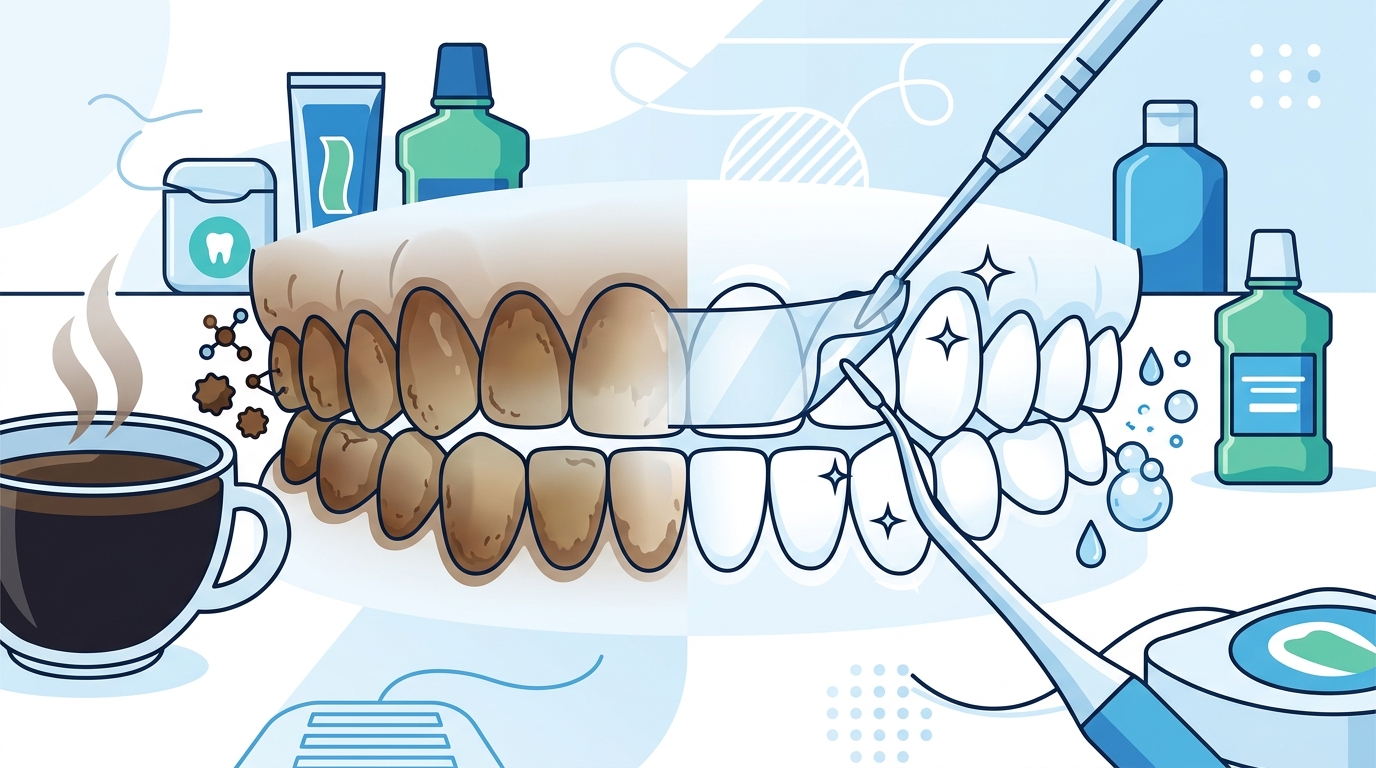
Tannins are natural polyphenolic compounds found in coffee, tea, and red wine. They bind to proteins on the tooth surface and create a yellowish or brownish layer of discoloration. This type of staining is classified as an extrinsic stain, meaning it originates on the outer enamel rather than inside the tooth structure.
Extrinsic stains are the easier category to treat because they sit on the surface. Intrinsic stains, by contrast, develop within the tooth due to medications, trauma, or excessive fluoride exposure. Understanding this distinction matters because coffee stains respond well to both at-home and professional whitening approaches.
Method 1: Consistent Oral Hygiene
The simplest defence against coffee stains is a solid daily routine. Brushing twice a day with a fluoride toothpaste and flossing once daily removes the plaque film that absorbs pigments from beverages like coffee. The mechanical action of brushing lifts surface stains before they set into the enamel.
Wait Before You Brush
After drinking coffee, wait at least 30 minutes before brushing. Coffee is mildly acidic, and brushing too soon can damage softened enamel. In the meantime, rinse your mouth with plain water to wash away tannin residue. For more tips on keeping teeth white, check out our five tips for whiter teeth.
Method 2: Whitening Toothpaste
Whitening toothpaste is a toothpaste formulated with mild abrasives or chemical agents designed to remove surface stains and brighten teeth over time. Common active ingredients include sodium bicarbonate, calcium carbonate, and low-concentration hydrogen peroxide. A study published in the Journal of Dentistry found that baking-soda-based toothpaste effectively removed extrinsic stains compared to regular formulas.
For daily stain protection, the Crest 3DWhite Brilliance Deep Stain Remover toothpaste uses a patented formula that dissolves the bonds holding deep stains to enamel, delivering visible results within one day while remaining safe for daily use.
Method 3: Whitening Strips (Most Effective At-Home Option)
Whitening strips are thin, flexible plastic strips coated with a hydrogen-peroxide-based gel that adheres directly to your teeth. Research cited by GoodRx shows that hydrogen peroxide strips are more effective than whitening toothpaste at removing stains because the peroxide penetrates enamel and oxidises discoloration from within.
Why Crest Whitestrips Stand Out
Crest is the number-one dentist-recommended at-home teeth whitening brand. The Crest 3DWhitestrips Glamorous White removes over 15 years of stains in just 14 days with 30-minute daily sessions. For heavier coffee staining, the Crest Whitestrips Supreme Bright delivers professional-level results over a 21-day treatment. Both variants are approved by the American Dental Association (ADA) and use the same enamel-safe whitening ingredient dentists rely on.
How to Apply
- Peel the strip from its liner and align it with your gum line.
- Press firmly so it moulds to the shape of your teeth.
- Wear for the recommended time (30 to 60 minutes depending on variant).
- Remove and rinse. Avoid eating or drinking for 30 minutes afterwards.
Browse all available variants in the Crest Whitestrips shop, with prices starting at just €37.95 and free shipping across the Netherlands.
Method 4: Natural Home Remedies
Baking Soda Paste
Baking soda is a mild abrasive that scrubs away surface stains without heavy enamel damage when used sparingly. Mix a small amount with water, brush gently for two minutes, and rinse thoroughly. Limit use to once or twice per week.
Oil Pulling
Oil pulling is an ancient Ayurvedic practice in which you swish a tablespoon of coconut oil in your mouth for 15 to 20 minutes. The oil binds to stain particles and bacteria, lifting them from the enamel. Scientific evidence is limited, but many users report mild whitening over several weeks.
Hydrogen Peroxide Rinse
Dilute 3% hydrogen peroxide with equal parts water and swish for 30 to 60 seconds. This oxidises surface stains in a similar way to whitening strips, though at a much lower concentration. Limit use to once a week to avoid gum irritation.
Method 5: Prevention Habits
Preventing stains is easier than removing them. Simple behaviour changes can significantly reduce discoloration:
- Drink through a straw to minimise contact between coffee and teeth.
- Rinse with water immediately after your last sip.
- Chew sugar-free gum containing xylitol to stimulate saliva and neutralise acids.
- Choose lighter roasts, which tend to produce less staining than dark roasts.
- Eat crunchy fruits and vegetables like apples, carrots, and celery. They act as natural abrasives that scrub surface stains as you chew.
Learn more about the causes of yellow teeth and how to address them proactively.
Method 6: Professional Dental Treatments
For deeply set coffee stains that resist at-home methods, a professional in-office whitening treatment may be necessary. Dentists use higher concentrations of bleaching agents (typically 25 to 40% hydrogen peroxide) activated by LED or laser light. Results are visible in a single session and can lighten teeth several shades.
Professional whitening typically costs between €300 and €600 per session in the Netherlands. If budget is a concern, ADA-approved Crest 3DWhitestrips Classic Vivid White offer a clinically proven alternative starting at a fraction of the price.
Method Comparison Table
| Method | Effectiveness | Time to Results | Cost Estimate | Enamel Safety |
|---|---|---|---|---|
| Daily Oral Hygiene | Low (preventive) | Ongoing | €5 - €15/month | Very safe |
| Whitening Toothpaste | Mild | 2 - 4 weeks | €5 - €20 | Safe with ADA seal |
| Whitening Strips (Crest) | High | 10 - 21 days | €37.95 - €94.95 | ADA approved, enamel safe |
| Baking Soda Paste | Mild | Several weeks | < €5 | Safe if limited to 1-2x/week |
| Oil Pulling | Minimal | Weeks to months | < €10 | Safe |
| Professional Whitening | Very high | 1 session | €300 - €600 | Supervised by dentist |
Key Takeaways
- Coffee stains are extrinsic, meaning they sit on the enamel surface and are treatable with the right approach.
- Tannins in coffee bind to tooth enamel and cause progressive yellowing over time.
- Hydrogen-peroxide-based whitening strips are the most effective at-home solution, outperforming toothpaste alone.
- Crest 3DWhitestrips are ADA-approved and can whiten teeth up to 8 to 23 shades depending on the variant.
- Prevention habits like using a straw, rinsing with water, and eating crunchy produce reduce new stain formation.
- Wait 30 minutes after coffee before brushing to protect acid-softened enamel.
- Professional whitening delivers the fastest results but costs significantly more than at-home alternatives.
Frequently Asked Questions
Why does coffee stain teeth more than other drinks?
Coffee contains high levels of tannins, chromogens, and acids. Tannins cause colour compounds to stick to enamel more readily than most other beverages, which is why coffee produces more visible staining than water or milk.
Can coffee stains become permanent?
Surface-level coffee stains are rarely permanent. However, years of heavy consumption without treatment can allow pigments to penetrate deeper into the enamel, making them harder (though not impossible) to remove.
How quickly do whitening strips remove coffee stains?
Most Crest Whitestrips variants show visible results within 10 to 14 days of daily use. The 1-Hour Express variant can begin removing years of stains in as little as one 60-minute session.
Is baking soda safe for daily use on teeth?
No. Baking soda is mildly abrasive, and daily use can wear down enamel over time. Dentists recommend limiting baking soda brushing to once or twice per week.
Do whitening strips damage enamel?
ADA-approved whitening strips like Crest 3DWhitestrips are formulated to be enamel safe. They use the same hydrogen peroxide ingredient that dentists trust for professional treatments.
Does drinking coffee through a straw really help?
Yes. A straw reduces the amount of direct contact between coffee and the front surfaces of your teeth, which limits tannin exposure and slows stain buildup.
How often should I get a professional dental cleaning?
Dentists recommend professional cleanings every six months. These appointments remove plaque and tartar buildup that contributes to discoloration and help catch staining early.
Can I use whitening strips and whitening toothpaste together?
Yes. Whitening toothpaste helps maintain results between strip treatments. For a complete routine, pair Crest 3D White Brilliance toothpaste with your preferred Whitestrips variant for lasting brightness.
Ready to Remove Coffee Stains for Good?
Stop letting your morning coffee dull your smile. Browse the full range of original, ADA-approved Crest Whitestrips at Whitestrips-shop.nl, with prices from €37.95 and free next-day delivery across the Netherlands. Order before 23:00 and your whiter smile ships tomorrow.