
Walking into a store or browsing online for teeth whitening products can feel overwhelming. Strips, gels, LED kits, pens, toothpastes — the options seem endless, and the marketing claims even more so. How do you separate genuine quality from hype? This guide breaks down every factor you should evaluate before spending a single euro on a whitening product.
1. Understand the Active Ingredient First
The single most important thing on any whitening product is its active ingredient. Virtually all clinically proven whitening products rely on one of three compounds:
- Hydrogen peroxide — the most common whitening agent that penetrates enamel and breaks up stains quickly.
- Carbamide peroxide — a slower-releasing compound that breaks down into hydrogen peroxide and urea upon contact with water.
- PAP (Phthalimidoperoxycaproic acid) — a newer, peroxide-free alternative marketed as gentler for sensitive teeth.
Professional-grade at-home kits often contain 10–35% carbamide peroxide or 6–10% hydrogen peroxide. An important conversion to remember: a 10% carbamide peroxide solution releases only about 3.6% hydrogen peroxide. So when comparing products, always check the effective peroxide concentration, not just the headline number.
Both hydrogen peroxide and carbamide peroxide are approved by dental associations worldwide for teeth whitening and have well-established safety profiles when used at appropriate concentrations.
2. Check the Concentration Level
More is not always better. Higher concentrations deliver faster results but also increase the chance of sensitivity and gum irritation. Here is a practical concentration guide:
| Concentration | Product Type | Best For |
|---|---|---|
| 1–3% hydrogen peroxide | Whitening toothpaste | Daily maintenance, mild surface stains |
| 5–10% hydrogen peroxide | Whitening strips & gels | Moderate discolouration, visible results in 1–2 weeks |
| 10–22% carbamide peroxide | Tray-based kits | Deeper stains, overnight or multi-hour wear |
| 35%+ hydrogen peroxide | In-office professional | Dramatic whitening in a single session |
If you have never whitened before, starting with a mid-range concentration (such as the strips available here at whitestrips-shop.nl) allows you to gauge your sensitivity before moving to anything stronger.
3. Evaluate the Delivery System
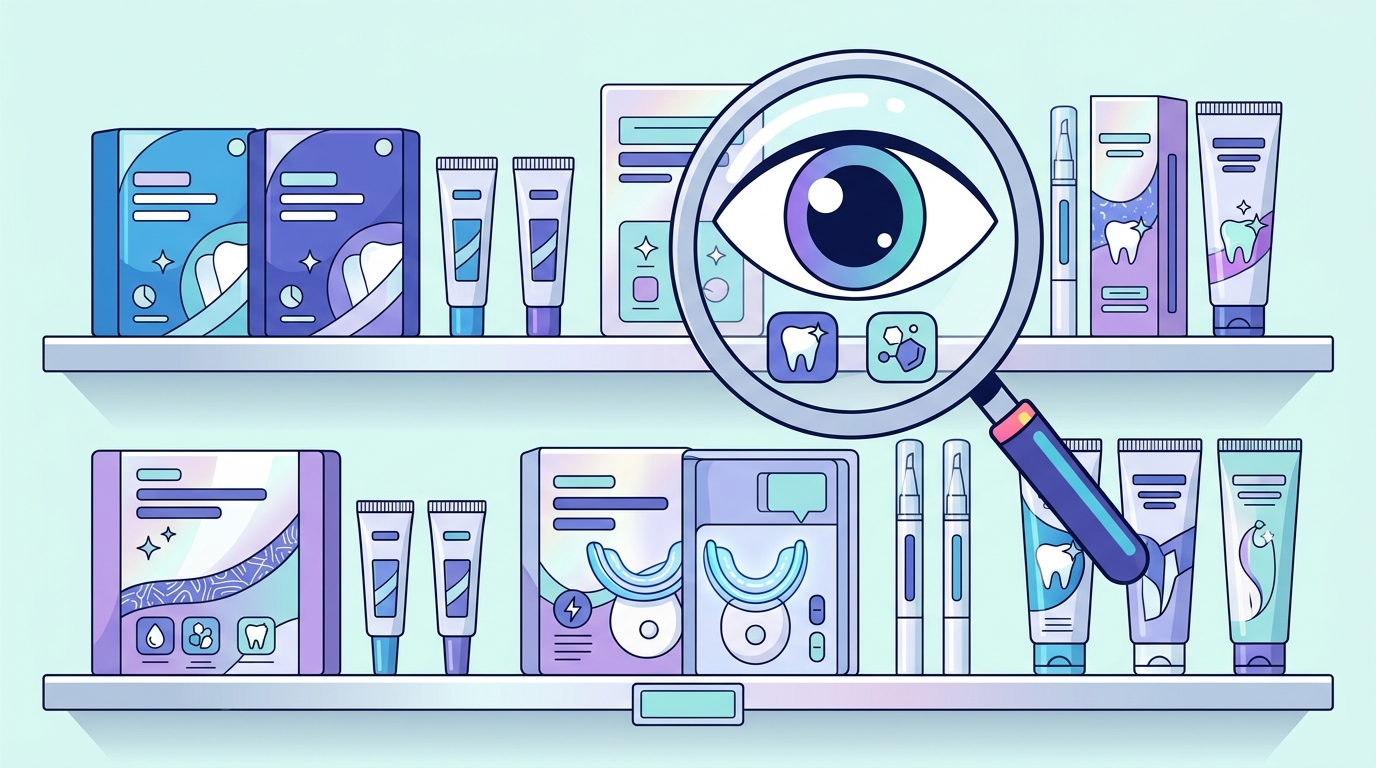
The vehicle that holds the whitening agent against your teeth matters just as much as the agent itself. Common delivery systems include:
Whitening Strips
Pre-coated flexible strips that adhere to the front surfaces of your teeth. They are convenient, portable, and provide consistent contact with the enamel. Most strip treatments ask for 30-minute daily applications over 7–14 days.
Custom-Fit or Mouldable Trays
Trays keep gel in prolonged contact with every tooth surface, which can produce more even whitening. Custom trays from a dentist offer the best fit, but boil-and-bite trays are an affordable alternative.
LED Kits
These combine a whitening gel with an LED mouthpiece. The light itself does not whiten teeth — it accelerates the breakdown of the peroxide gel. Results depend primarily on the gel strength, not the light.
Whitening Pens
Pens offer precise, on-the-go application but deliver a thin layer that saliva washes away within 30–60 seconds. They work best as a maintenance tool between more intensive treatments.
Whitening Toothpaste
These rely on mild abrasives and low-level peroxide to remove surface stains. They typically lighten teeth by about one or two shades over several weeks of consistent use, making them ideal for upkeep rather than dramatic change.
4. Prioritise Enamel Safety
Your enamel does not regenerate. Once damaged, it is gone permanently. When evaluating a product's safety profile, look for:
- Near-neutral pH — acidic formulas can erode enamel over time. Quality products are formulated at or near neutral pH.
- No harsh unknown chemicals — stick to products with clearly labelled, clinically validated ingredients.
- ADA Seal or equivalent endorsement — while not every good product carries it, an official seal adds confidence.
Be especially cautious with charcoal-based whitening products. Most charcoal toothpastes have high RDA (Relative Dentin Abrasivity) values that can wear down enamel, and scientific evidence does not support manufacturers' whitening claims for these products.
5. Factor In Tooth Sensitivity
Temporary tooth sensitivity and gingival irritation are the most common side effects of teeth whitening. If you already have sensitive teeth, consider the following strategies:
- Choose a product with lower peroxide concentration or a PAP-based formula.
- Look for added potassium nitrate, an ingredient that helps soothe sensitivity while whitening.
- Use a desensitising toothpaste for about a month before starting your whitening treatment.
- Opt for carbamide peroxide over hydrogen peroxide — it releases whitening power more slowly, which tends to be gentler on teeth.
If pain becomes excruciating during any whitening treatment, stop immediately and consult your dentist.
6. Consider Your Goals and Timeline
Not every whitening product suits every situation. Ask yourself these questions before buying:
- How many shades whiter do I want? A one-shade boost requires a different product than a dramatic multi-shade transformation.
- How quickly do I need results? Strips and LED kits can show visible changes in days, while toothpastes take 4–8 weeks.
- Am I maintaining or correcting? Maintenance calls for toothpaste or pens; correction calls for strips or tray kits.
7. Assess Brand Reputation and Reviews
The whitening market is flooded with unregulated products making bold claims. To protect yourself:
- Research the manufacturer — look for clinical studies, professional endorsements, or dental community backing.
- Read verified user reviews, paying attention to comments about sensitivity, actual results, and ease of use.
- Buy from reputable retailers. When shopping online, ensure the product is sold by a verified seller rather than an unknown third-party marketplace vendor.
8. Know What Whitening Cannot Do
Setting realistic expectations saves both money and disappointment:
- Whitening only works on natural teeth. Crowns, veneers, fillings, and other restorations will not change colour.
- Intrinsic stains are harder to treat. Deep discolouration from medications (such as tetracycline) or trauma often requires professional treatment.
- Results are not permanent. Coffee, tea, wine, and tobacco will re-stain teeth over time. A maintenance routine is essential.
9. Budget: What Should You Expect to Pay?
Teeth whitening products span a wide price range. Over-the-counter strips can start under €50, while professional in-office treatments can cost several hundred euros or more. Higher-cost professional options often deliver more durable, longer-lasting results, but quality at-home strips offer an excellent balance of effectiveness and value for most people.
10. Always Consult Your Dentist
Regardless of which product you choose, a dental check-up before whitening is strongly recommended — especially if you have existing dental work, gum disease, or a history of sensitivity. Your dentist can identify the cause of discolouration and recommend the most suitable approach for your specific situation.
Key Takeaways
- Always check the active ingredient (hydrogen peroxide, carbamide peroxide, or PAP) and its concentration.
- Match the delivery system to your lifestyle — strips for convenience, trays for thoroughness, toothpaste for maintenance.
- Protect your enamel by avoiding overly abrasive or acidic formulas and unproven ingredients like activated charcoal.
- Start with a moderate concentration if you are new to whitening or have sensitive teeth.
- Whitening does not work on dental restorations — manage expectations accordingly.
- Consult your dentist before beginning any whitening regimen.
Frequently Asked Questions
Is hydrogen peroxide or carbamide peroxide better for teeth whitening?
Both are clinically proven and produce comparable whitening results. Hydrogen peroxide works faster, making it suited for short-wear products like strips. Carbamide peroxide releases its whitening power more gradually, which makes it ideal for longer-wear tray systems and tends to cause less immediate sensitivity.
Can teeth whitening damage my enamel?
When used as directed at recommended concentrations, peroxide-based whitening is considered safe. However, aggressive treatments or overly abrasive products (such as charcoal toothpaste) can increase surface roughness and reduce microhardness of enamel. Always follow the product instructions and do not exceed the recommended usage.
How long does it take to see results from whitening strips?
Most whitening strips show visible results within a few days of use, with a typical treatment course of 7–14 days. The exact timeline depends on the peroxide concentration and the severity of your staining.
Are teeth whitening products safe for sensitive teeth?
Yes, provided you choose the right product. Look for lower peroxide concentrations, PAP-based formulas, or products containing potassium nitrate. Carbamide peroxide is generally gentler than hydrogen peroxide for people with sensitivity.
Do LED whitening lights actually work?
LED lights do not whiten teeth on their own. They accelerate the chemical breakdown of the whitening gel, potentially speeding up results. The effectiveness of an LED kit depends primarily on the strength and quality of the gel it comes with.
Why can I not whiten my crowns or fillings?
Whitening agents only penetrate natural tooth enamel. Dental restorations like crowns, veneers, and fillings are made from materials that do not respond to peroxide. If you have visible restorations, consult your dentist about your options.