
A brighter smile no longer requires an expensive trip to the dentist. At-home whitening treatments have become one of the most accessible cosmetic dental options, with prices that fit nearly every budget. But how much should you actually expect to spend? This guide breaks down the real costs of every at-home whitening method available in 2026, from basic toothpaste to professional-grade take-home kits.
The At-Home Whitening Cost Spectrum at a Glance
At-home whitening products cover a remarkably wide price range. Over-the-counter options like strips and whitening toothpaste can cost as little as €5 to €50, while dentist-prescribed take-home kits can run up to €400 or more. The price you pay largely depends on the strength of the whitening agent and whether a dental professional is involved in your treatment plan.
| Method | Typical Cost | Expected Results | Duration of Results |
|---|---|---|---|
| Whitening Toothpaste | €5–€15 | 1–2 shades lighter | Requires ongoing use |
| Whitening Rinses | €5–€10 | 1–2 shades lighter | Requires ongoing use |
| OTC Whitening Strips | €20–€55 | 1–3 shades lighter | 1–4 months |
| Premium Whitening Strips (e.g. Crest 3D Whitestrips Professional Effects) | €30–€60 | Up to 19 shades lighter | 6–12 months |
| LED Whitening Kits (OTC) | €45–€100 | 3–5 shades lighter | 3–6 months |
| Custom Dentist Take-Home Trays | €150–€400 | 3–6 shades lighter | 4–6 months |
Why Prices Vary So Much
Several factors drive the cost differences between at-home whitening products:
- Peroxide concentration: Both professional and OTC products use peroxide-based bleaching agents, but concentration levels vary significantly. Higher-concentration products cost more but deliver faster, more dramatic results.
- Professional supervision: Dentist-prescribed take-home kits include custom-moulded trays and stronger gels, which accounts for their higher price tag.
- Brand and formulation: Well-known brands such as Crest Whitestrips command a premium due to clinical testing and ADA recognition.
- Included accessories: Kits bundled with LED lights or desensitising gels tend to cost more than basic strip-only products.
Budget Tier: €5–€50
Whitening toothpastes, mouth rinses, and basic whitening strips fall into this bracket. These products are widely available at supermarkets and pharmacies. They work by using mild abrasives or low-concentration peroxide to remove surface stains. Results are subtle—typically one to three shades lighter—and require consistent daily use over several weeks.
Popular products in this tier include store-brand whitening strips, Crest Classic Vivid strips (around €20 for 10 treatments), and various whitening toothpastes from brands like Colgate and Oral-B.
Mid-Range Tier: €30–€100
This is where you find the most popular at-home whitening products, including Crest 3D Whitestrips Professional Effects. These strips use hydrogen peroxide at higher concentrations than budget options and are designed to deliver professional-level results over a 20-day treatment period.
Crest 3D Whitestrips Professional Effects typically retail between $28 and $46 (approximately €25–€42), making them one of the most cost-effective serious whitening options available. They are also one of the only whitening strips that carry the ADA Seal of Acceptance, adding a layer of credibility.
LED whitening kits from brands like AuraGlow and Crest's own LED bundles also fit this tier. Expect to pay €45 to €100 for these kits, which pair whitening gel with an LED accelerator light.
Premium Tier: €150–€600
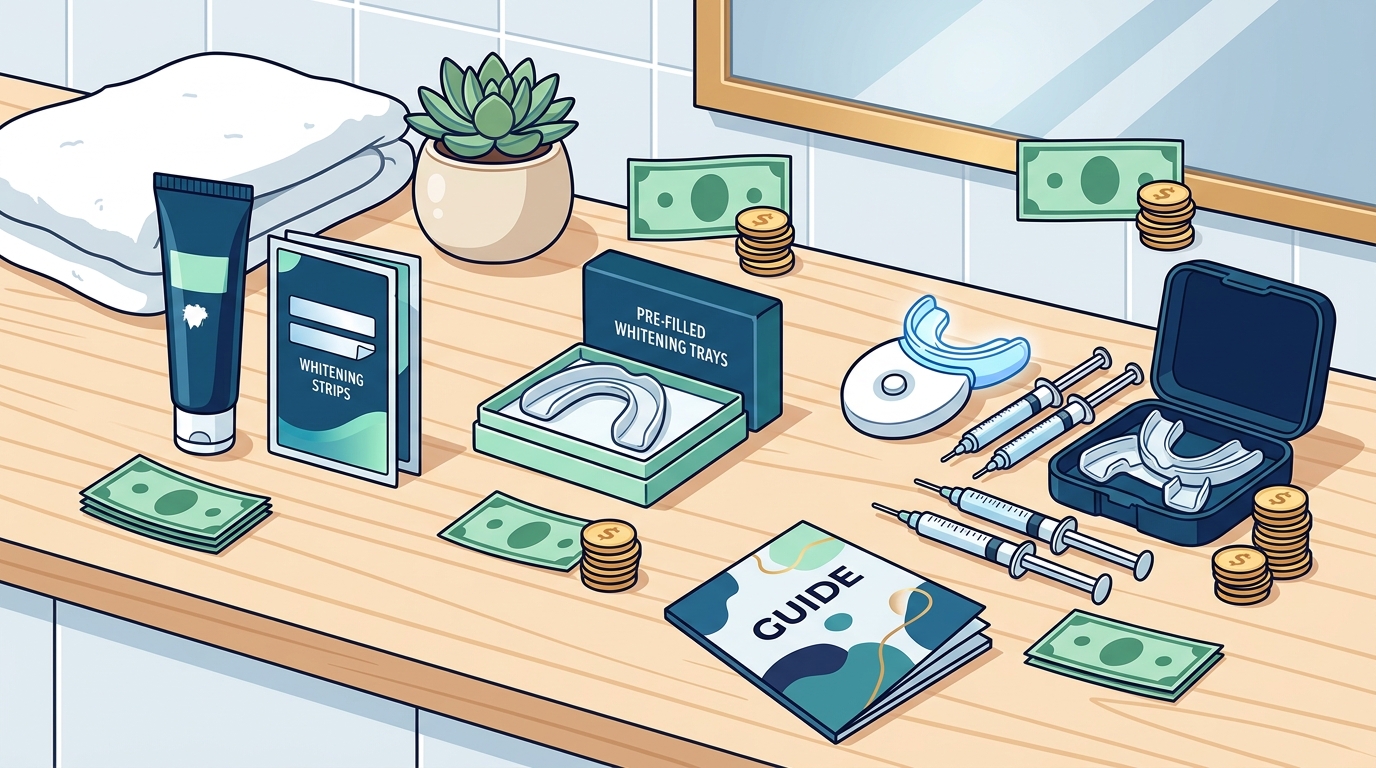
Dentist-prescribed take-home whitening kits represent the top end of at-home treatments. These kits include custom-fitted trays made from impressions of your teeth and professional-strength whitening gel. You wear the trays daily for one to two weeks, gradually achieving results that come closer to in-office whitening.
The average cost for custom take-home trays sits between €150 and €400. Some premium kits with extended gel supplies can reach €600. While considerably more expensive than OTC strips, these kits offer a stronger whitening agent and a more precise fit, which can reduce gum irritation and improve evenness of results.
How At-Home Costs Compare to Professional In-Office Whitening
To put at-home costs into perspective, professional in-office whitening ranges from €300 to €1,000 per session, with laser whitening pushing up to €1,500. That means even the most expensive at-home kit costs a fraction of a single in-office session.
Here is a quick comparison:
- OTC whitening strips (€20–€55): Roughly 5–10% of in-office cost
- Premium strips with LED (€45–€100): Roughly 10–15% of in-office cost
- Custom take-home trays (€150–€400): Roughly 30–50% of in-office cost
For many people, at-home treatments offer impressive value, especially for maintaining results between occasional professional sessions.
What Affects Your Total Spend Over Time
The initial purchase price is only part of the equation. Ongoing costs matter too:
- Maintenance treatments: Whitening results are not permanent. OTC strip results typically fade within one to four months. You may need to repeat treatments three to four times per year, adding €60–€220 in annual costs for strips.
- Sensitivity products: Some users need desensitising toothpaste or gel during and after whitening, adding €5–€15 per treatment cycle.
- Staining habits: Coffee, tea, red wine, and tobacco accelerate re-staining, which may require more frequent touch-ups.
- Dental check-ups: It is advisable to consult a dentist before whitening, especially if you have sensitivity or dental restorations. An initial exam may cost €50–€150.
Getting the Best Value from At-Home Whitening
Here are practical strategies to maximise results while keeping costs down:
- Start with a dental check-up: Whitening works best on healthy teeth. Addressing cavities or gum issues first prevents wasted money on ineffective treatments.
- Choose clinically tested products: Products with ADA approval or clinical studies behind them tend to deliver more predictable results.
- Buy multi-packs or subscribe: Many brands offer subscribe-and-save discounts. Crest Whitestrips, for example, can drop below €30 per box with subscription pricing on major retailers.
- Maintain results with whitening toothpaste: A €5–€10 whitening toothpaste used daily can extend the life of a strip treatment by weeks.
- Avoid staining foods after treatment: The first 48 hours after whitening are critical. Avoiding coffee, red wine, and dark foods helps lock in results.
Key Takeaways
- At-home whitening treatments range from approximately €5 for whitening toothpaste to €600 for premium dentist-prescribed kits.
- The most popular mid-range option—whitening strips like Crest 3D Whitestrips—costs between €25 and €55 and can whiten teeth by multiple shades.
- Professional in-office whitening costs 3–20 times more than at-home alternatives.
- Results are temporary; budget for ongoing touch-up treatments throughout the year.
- Choosing clinically validated products and maintaining good oral hygiene extends the value of every euro spent.
Frequently Asked Questions
What is the cheapest effective at-home whitening option?
Basic whitening strips priced between €20 and €30 are the most affordable option that delivers visible results. Whitening toothpastes (€5–€15) help maintain brightness but produce only subtle changes on their own.
Are expensive at-home whitening kits worth it?
Dentist-prescribed take-home kits (€150–€400) use stronger whitening agents and custom-fitted trays, which generally produce more even, longer-lasting results. Whether they are worth it depends on the severity of your staining and your whitening goals.
How often do I need to repeat at-home whitening treatments?
OTC strip results typically last one to four months. Most users repeat treatment three to four times per year for consistent brightness. Dentist take-home tray results can last four to six months with proper maintenance.
Does insurance cover at-home teeth whitening?
Teeth whitening is considered a cosmetic procedure and is not covered by most dental insurance plans. Some plans may offer a small allowance, but this is rare.
Can I use Crest Whitestrips if I have sensitive teeth?
Crest offers a Sensitive & Gentle variant designed specifically for people with tooth sensitivity. Using a desensitising toothpaste before and after treatment can also help. However, it is best to consult your dentist before starting any whitening regimen if sensitivity is a concern.
How do at-home whitening strips compare to in-office whitening?
In-office whitening uses higher-concentration bleaching agents and can lighten teeth by up to eight shades in a single session. At-home strips typically achieve one to three shades with basic products and up to 19 shades with premium strips used over several weeks. In-office results last longer but cost significantly more.